Best open-source roguelikes
NetHack is the roguelike everyone has heard of, and it’s the one we’d least want you to start with. It’s brilliant and bottomless, and it expects you to read a wiki before it lets you have much fun. The free classics that came after it learned to teach you instead.
Every game here is a traditional roguelike. They’re turn-based, so nothing moves until you do. Each dungeon is generated fresh. And death is permanent: a dead character stays dead, and you start over. That shared downside is also the genre’s whole point. You’ll die early and often in all ten, and your first win may take weeks of attempts. All ten are free, and their code is open, though Tales of Maj’Eyal keeps its art under a closed license.
What separates them is how they teach you, what a run is like, and what they look like. For most people we’d start with Dungeon Crawl Stone Soup: it’s deep enough to last years, it cuts the chores older roguelikes are known for, and you can play it in a browser tab tonight. If you want the gentlest possible start, pick Brogue. If you mostly play on a phone, pick Shattered Pixel Dungeon.
The ten at a glance
| Game | What a run is like | Looks and controls |
|---|---|---|
| Dungeon Crawl Stone Soup | A long dive through branching dungeons with a build you plan | Tiles or text; browser or desktop |
| Shattered Pixel Dungeon | An evening-sized run through 26 floors | Pixel art, made for touch |
| Brogue | 26 floors with no classes; you are what you find | Glowing colored text or tiles; full mouse |
| Tales of Maj’Eyal | A long campaign with a class and talent trees | Tiles, mouse-driven |
| Cataclysm: Bright Nights | An open-world survival life with no ending | Tiles or text; keyboard-heavy |
| Cataclysm: Dark Days Ahead | The same, with more realism to manage | Tiles or text; keyboard-heavy |
| Angband | A long descent to Morgoth, with a town to retreat to | Text by default, tilesets optional |
| NetHack | A long dive where almost anything interacts | Text by default |
| DRL | Short, loud runs through Doom’s demons | Tiles by default |
| Infra Arcana | A tense 1920s horror crawl | Tiles or text; keyboard only |
Dungeon Crawl Stone Soup
Best place to start for most players
#1 4.5/5
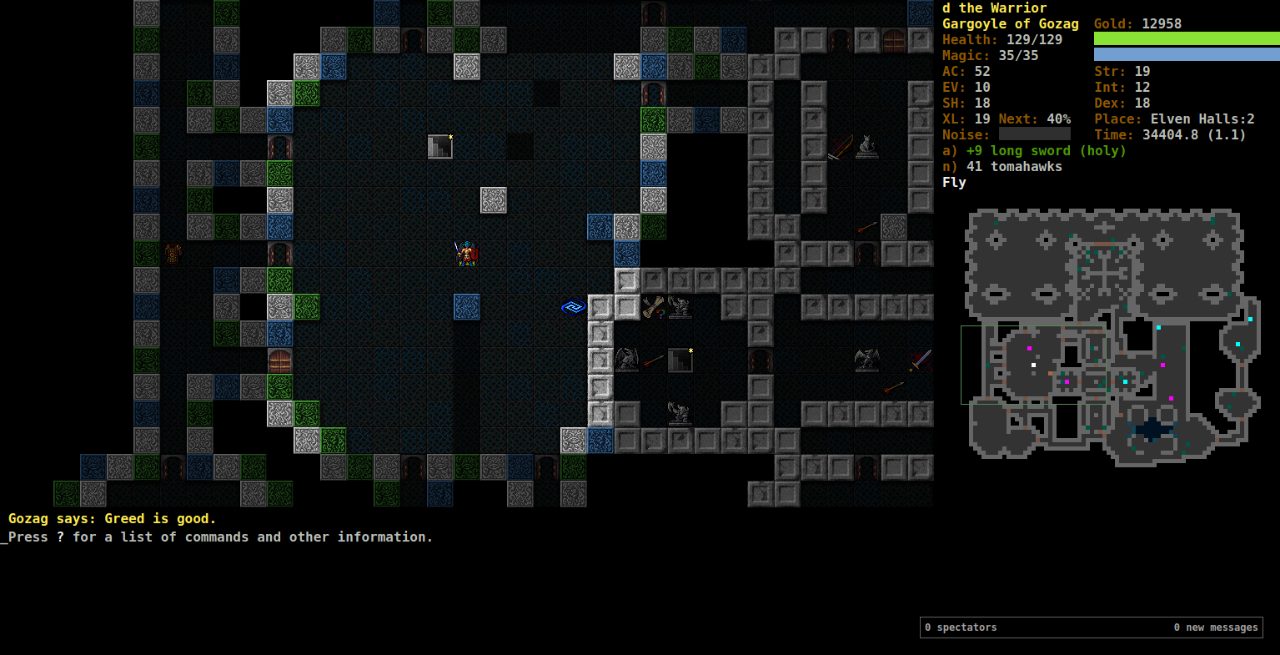
Dungeon Crawl Stone Soup (everyone calls it DCSS, or just Crawl) is the one we’d hand to someone who wants a deep roguelike and hasn’t picked one yet. You choose a species and a background, then dive for the Orb of Zot through a main dungeon and its side branches. To reach the Orb you need at least three of fifteen runes, which wait at the bottom of branches like the Spider Nest and the Slime Pits. Between more than two dozen species, gods that each change how you play, and skills you train as you go, no two characters feel alike.
What makes it the default pick is how much busywork it cuts. There’s no food to manage and no loot to sell, one key explores the level for you, and another walks you anywhere you’ve already been. It obsessively respects your time: nearly every turn you spend is a decision, not upkeep.
It’s also the easiest to try. The front page of the official site is a button to play in your browser: pick one of about ten public servers and you’re playing the tiles version in a tab, with your games recorded, anyone able to watch, and a tournament after each major release. Downloads for Windows, macOS and Linux play offline, and the site links an Android port.
The rough part is the first five minutes. Character creation throws a wall of species and backgrounds at you, and plenty of newcomers freeze there. Species matters far more than background, and the selection screen marks the easier combinations, so pick one of those. A tutorial and a hints mode sit in the main menu. The tiles are functional rather than pretty, and while you can click to move and inspect, the game is happiest on a keyboard.
What it does
- Browser play on public servers, plus offline downloads for Windows, macOS and Linux
- A tutorial and a hints mode in the main menu
- Auto-explore and travel commands, and no food to manage
- Online tournaments after each major release
Pros
- Huge build variety from species, backgrounds and gods
- Almost no chores, so nearly every turn is a decision
- Nothing to install if you play in the browser
Cons
- Character creation overwhelms many first-timers
- Plain tiles and a keyboard-first interface
- Skip if:
- You want a run you can finish in one sitting
Shattered Pixel Dungeon
Pick for phones and short sessions
#2 4.4/5
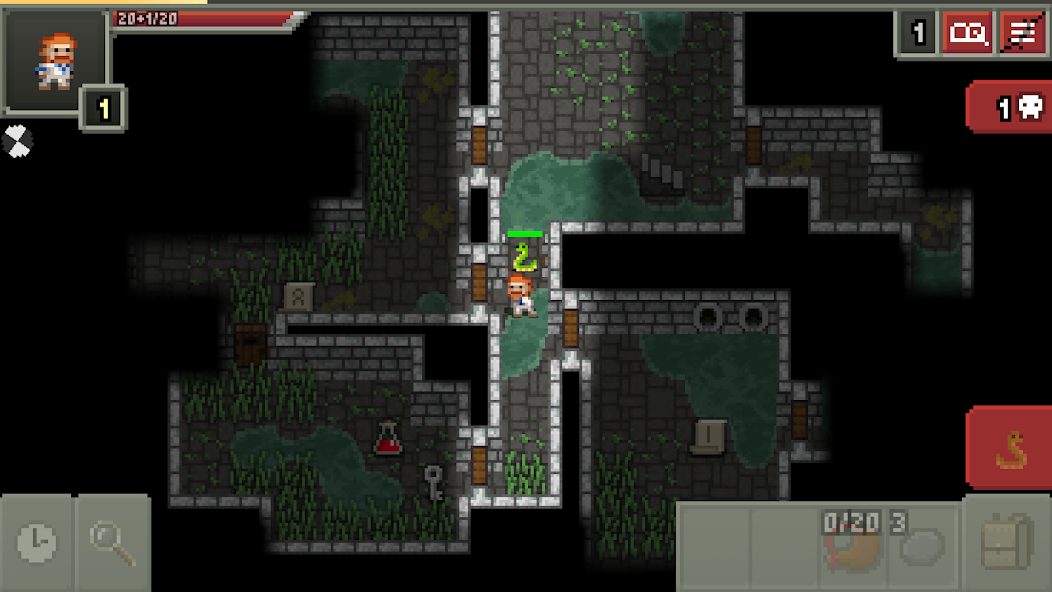
Shattered Pixel Dungeon began as a balance mod of Pixel Dungeon and grew into the most polished game here on a touchscreen. You pick one of six heroes, each with two subclasses and a talent tree, and fight down 26 floors across five regions, with a boss guarding the end of each. The pixel art is crisp, every action is a tap, and a full run fits an evening rather than a month. The first two floors of your first run double as a tutorial.
It’s the one most people meet first, too: the Android version alone shows more than five million downloads on Google Play. It’s free there, with optional in-app purchases, and it’s on iOS as well. On a computer, the free builds are on the project’s GitHub releases page, or you can pay $9.99 on Steam for the convenience.
What you give up is breadth. Six heroes and a fixed run through five regions mean a dedicated player sees most of it far sooner than in Crawl or NetHack. And it was clearly designed for a thumb first: it plays fine with a mouse and keyboard, but it feels most at home on a phone.
Pros
- The cleanest touch interface of any roguelike here
- Runs short enough to finish in an evening
- Frequent updates that add heroes and rework regions
Cons
- Fewer heroes and regions to master than the big classics
- Desktop play feels like a phone game on a big screen
- Choose if:
- You mostly play on a phone
Brogue: Community Edition
Gentlest way in
#3 4.2/5
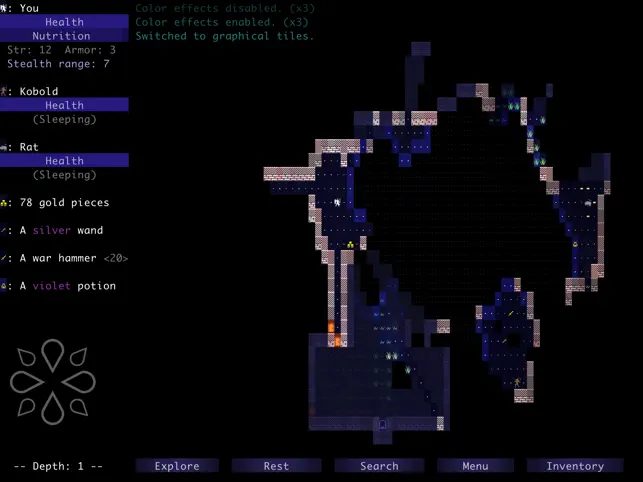
Brogue throws out most of what makes roguelikes intimidating. There are no classes, no experience levels and no skill trees. You’re the same nobody every run, and the character you end up with is whatever the dungeon handed you: a staff of firebolt here, an ally you freed from shackles there, an unknown potion you drank at the right (or wrong) moment. Twenty-six floors stand between you and the Amulet of Yendor.
The depth lives in the dungeon itself. Grass burns, gas drifts and explodes, deep water washes items out of your pack, and every monster behaves in ways you can read and exploit. It’s like learning piano on a keyboard with only ten keys: few commands, every one of them sharp.
It’s also the best-looking text game you’ll find. Colored characters flicker with firelight and fade into darkness, a sidebar lists every monster in view and what it’s doing, and you can play the whole game with the mouse. Press G if you’d rather have graphical tiles.
Today’s Brogue is Brogue: Community Edition, which volunteers took over after the original creator stopped updating it. It’s a free download for Windows, macOS and Linux, and it bundles two shorter modes, Rapid Brogue and the even shorter Bullet Brogue, for when you only have an hour. There is no official phone version, though a free third-party port runs on iPad. If planning a character is what you enjoy most, Brogue can feel thin next to Crawl.
What it does
- No classes or levels; your character is the items you find
- Full mouse play, with text or graphical tiles
- Rapid Brogue and Bullet Brogue for shorter runs
Pros
- The easiest game here to learn without outside help
- A clean, beautiful screen that shows what matters
- Fire, gas and water make every fight a small puzzle
Cons
- No character builds to plan between runs
- Desktop only, apart from an unofficial iPad port
- Choose if:
- Permadeath roguelikes have scared you off before

Tales of Maj'Eyal
Big class roster, forgiving modes
#4 3.8/5
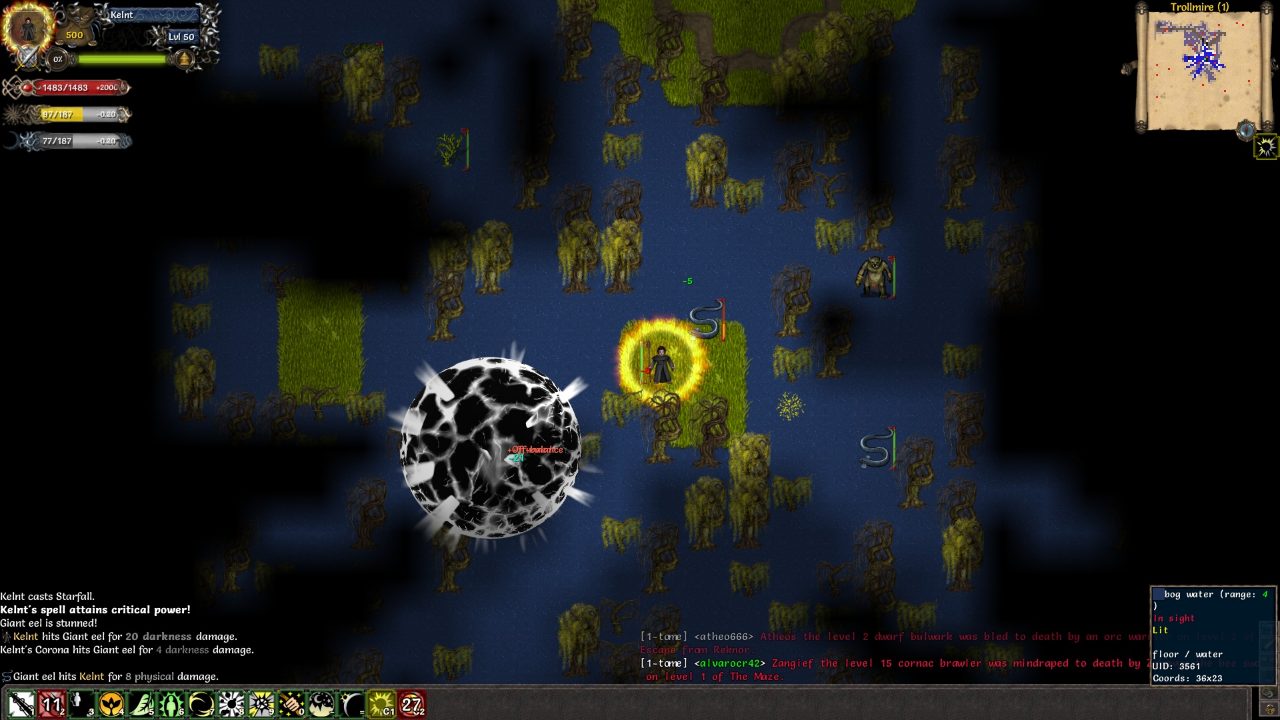
Tales of Maj’Eyal (ToME) is the roguelike for people who love character builds more than dungeon puzzles. It has more than twenty classes across nine races, each with talent trees you fill as you level, and fights are quick, tactical and full of flashy abilities. It looks and plays more like a classic RPG than anything else here, with graphical tiles, a hotbar and the mouse doing most of the work.
It’s also the most forgiving about death. Besides a one-life mode, it offers modes with extra lives and an exploration mode with no limit on lives, a soft landing if permadeath is what worries you. Even so, deaths can come suddenly, and you’ll probably want a wiki open while you learn.
Two caveats. Many classes and races start locked and open up as you play. The licensing is split, too: the engine code is open source, but the art and other game files are licensed only for use in the game. It’s still free from te4.org. Steam and GOG sell it for $6.99 with the extras donors get, and three paid expansions add classes, races and campaigns. There hasn’t been a new release in years, so expect a finished game rather than one that keeps changing.
Pros
- Many classes with deep talent trees
- Extra-lives and exploration modes soften permadeath
- Mouse-friendly graphical interface
Cons
- Many classes start locked until you unlock them in play
- Art and other game files aren't open source
- No new release in years
- Skip if:
- You want a game whose code and art you can freely fork

Cataclysm: Bright Nights
Cataclysm with less realism to manage
#5 3.6/5
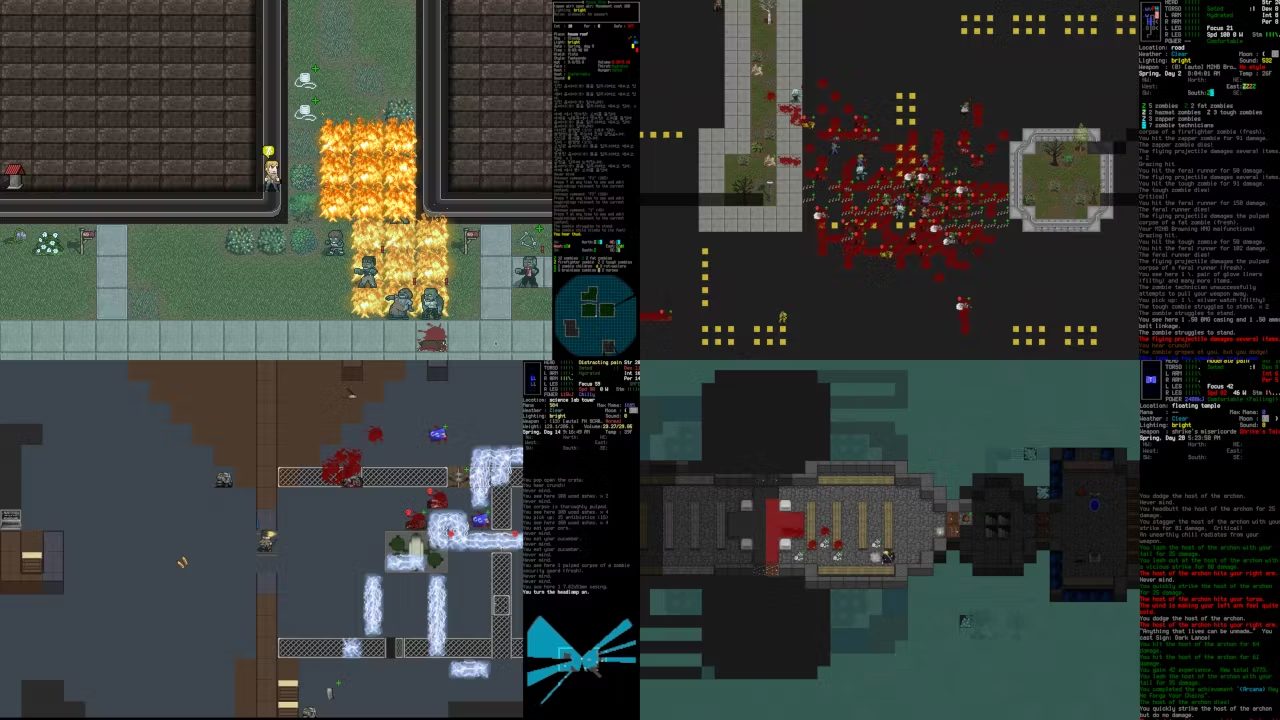
The two Cataclysm games aren’t dungeon dives at all. You wake up in a generated New England after the end of the world, and from there it’s your story: scavenge a town, fortify a farmhouse, build a car out of scrap, install bionics, mutate, or die to a zombie horde on day two. There’s no ending to reach; a character lasts until it dies or you move on. No other game here has as many systems.
Bright Nights is a fork of Dark Days Ahead (the original, below) that went its own way. It puts less weight on realism, leans harder into science fiction with robots, power armor and energy weapons, and supports Lua mods. If the idea of tracking your character’s nutrition in detail sounds like a chore, Bright Nights is the Cataclysm to try. A new stable version arrives every few months.
Both games share the same steep start: dense keyboard menus, a tutorial the projects themselves warn may not work, and a wiki you’ll keep open in another window. Tilesets make the map readable, but only NetHack is harder to learn of the ten. Both are free for Windows, macOS, Linux and Android.
Pros
- The Cataclysm sandbox with less emphasis on realism
- More science fiction: robots, power armor, energy weapons
- Lua modding and frequent stable releases
Cons
- A smaller community than Dark Days Ahead
- A steep, keyboard-heavy start
Cataclysm: Dark Days Ahead
The original survival sandbox
#6 3.5/5
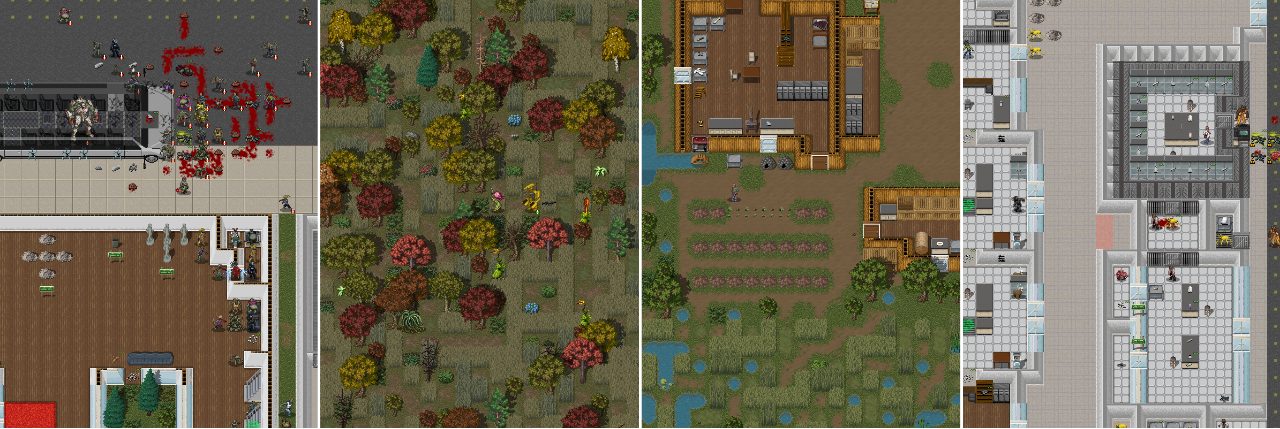
Dark Days Ahead is the original and has by far the bigger community, with more than a thousand contributors on GitHub and new experimental builds several times a day. Its developers chase realism, so you’ll manage hunger, thirst, temperature, sleep and wounds in detail, and the simulation keeps growing. That detail is the appeal for some players and the tedium for others; the split is why Bright Nights exists.
Play the stable release, currently 0.I “Ito”; the experimental builds get new content first but break more often. There’s a $19.99 Steam edition, but it’s the same game with cloud saves and achievements, so buy it only if you want to support the developers.
Which Cataclysm, then? Dark Days Ahead if you want the most content, the most mods and the biggest community to ask for help. Bright Nights if realism upkeep wears you down or you’d like more science fiction. The core game is the same either way.
Pros
- The most detailed survival simulation here
- A huge community and constant development
- Crafting, vehicles, base building, bionics and mutations
Cons
- Detailed survival upkeep can feel tedious
- A steep, keyboard-heavy start with a tutorial that may not work
Angband
Long Tolkien dive with a town
#7 3.5/5
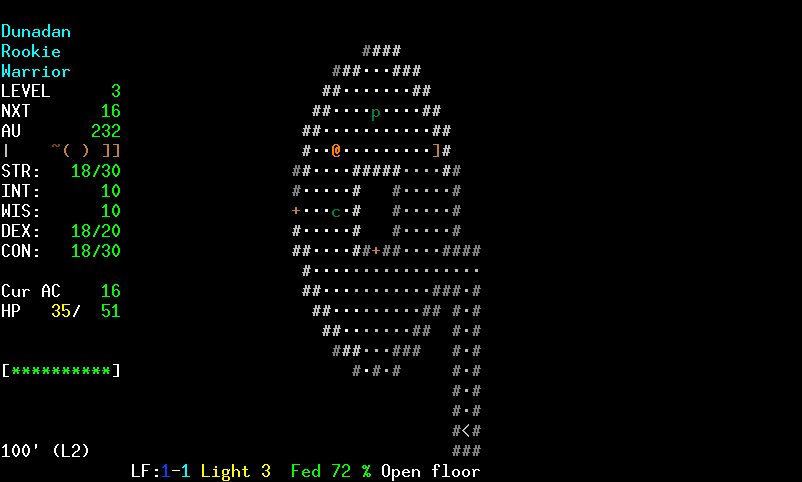
Angband is the grandparent of a whole family of games. You start in a small town, buy supplies and go down; a hundred levels below waits Morgoth. Along the way you’ll meet much of Tolkien’s bestiary and a mountain of randomized loot. Because you can climb back to town to restock whenever you like, the early game is calmer than in most roguelikes, and the danger builds slowly. It’s a long haul: one commenter put it at “20-40 hours to get to Morgoth if you know what you’re doing.”
Modern Angband is friendlier than its reputation. Item properties reveal themselves as you use them, and version 4.2 has auto-explore, though it’s switched off by default, so turn it on in the options. It does look old: text by default, with tilesets in the menus. You can also play it in a browser at angband.live, which hosts many of its variants too.
Pros
- A steady, classic descent with a town to fall back on
- Browser play, plus a large family of variants
- Gentler early game than most roguelikes
Cons
- One dungeon and one goal make runs feel alike
- Dated look, and auto-explore is off until you enable it

NetHack
Endless secrets, steepest start
#8 3.2/5
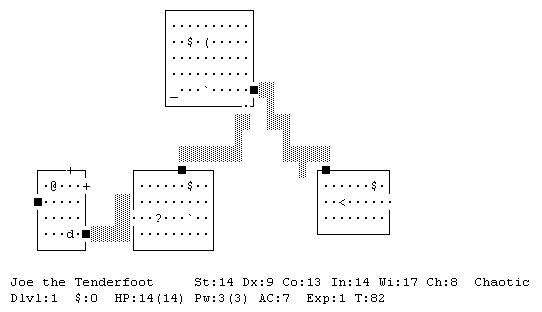
NetHack is the legend. Almost anything you think of trying works: dip a sword into a fountain, write Elbereth in the dust to scare monsters off, pray when you’re starving, eat a corpse to gain the monster’s power. The game is so dense with these interactions that some players go decades without ever winning.
That density is also why it’s a poor first roguelike. NetHack explains almost nothing, working out what an unidentified item does is a puzzle most players solve with outside knowledge, and plenty of deaths come from rules you couldn’t have guessed. Reading spoilers is normal here, not cheating. The default look is plain text, and only some builds, such as the Windows one, offer tiles.
NetHack 5 is the first major release since 3.6, and saves from older versions don’t carry over. The easiest way to play is the public server at nethack.alt.org, over SSH or in a browser, where every game is recorded and anyone can watch. Come here after another of these games has taught you the basics.
Pros
- Famously dense with hidden interactions to discover
- Public servers to play and watch in a browser
- A huge community and decades of shared knowledge
Cons
- Close to unplayable without spoilers for a newcomer
- Plain text by default and keyboard only

DRL, Doom the Roguelike
Doom in coffee-break runs
#9 3.2/5
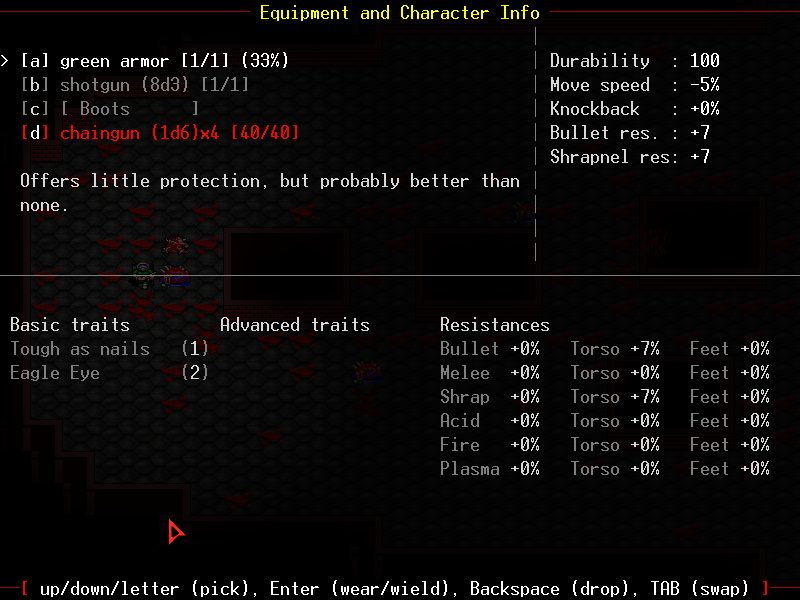
DRL, once called DoomRL, turns Doom into a turn-based roguelike, and it’s the fastest-paced game here. You pick a marine class and a starting trait, then fight downward with shotguns and chainguns against demons you’ll recognize. Leveling unlocks traits that branch into builds, weapons can be modded and assembled from parts, and once you’re comfortable, challenge modes such as melee-only runs change the whole game.
Runs are short, the screen uses Derek Yu’s tiles by default, and it’s free for Windows and Linux. It’s being updated again, and its developers are also making Jupiter Hell Classic, a paid remake on Steam; DRL itself stays free. What it lacks is the long-term depth of the games above it, so think of it as a palate cleanser between long Crawl runs.
Pros
- Fast, punchy runs that fit a lunch break
- Traits, weapon mods and challenge modes for replay
- Readable tiles by default
Cons
- Far less long-term depth than Crawl or NetHack
- Desktop only
Infra Arcana
Lovecraftian horror crawl
#10 2.8/5
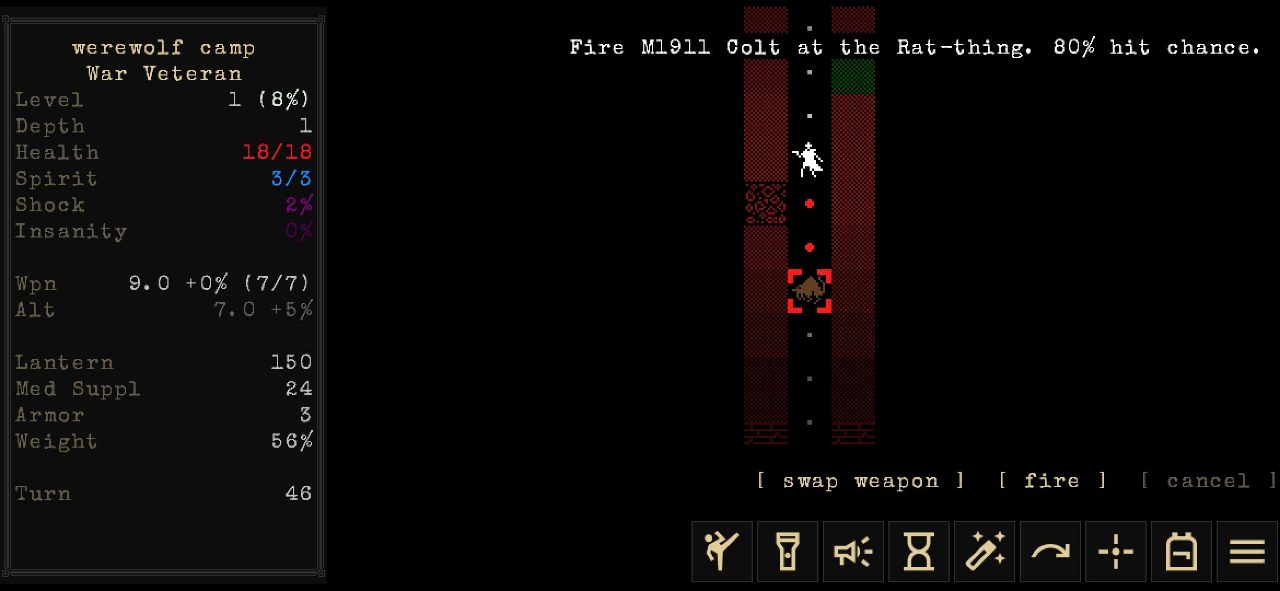
Infra Arcana is a horror game first. You’re an investigator in the early 20th century, descending into the lair of a cult with tommy guns, dynamite and a mind that slowly gives way. Seeing horrors and lingering on a level builds shock; too much brings phobias and insanity. You earn experience by discovering things rather than killing them, so slipping past a ghoul is often the smart play.
It’s tense and unlike anything else here, and its six backgrounds play differently. It’s also the narrowest choice: prebuilt downloads only for Windows and Linux (Mac players compile it themselves), keyboard-only controls, and a shorter game overall. Pick it for the atmosphere.
Pros
- Dread built from sanity and shock systems
- Experience from exploring, which rewards stealth
Cons
- Prebuilt only for Windows and Linux
- Keyboard only
Also considered
- ADOM. It shows up on most lists of classic free roguelikes, and its classic version is free to download, but its source code isn’t public, so it isn’t open source. The newer edition with tiles is sold on Steam.
Scores
1–5 per criterion · select a score for its reasoning and any sources
| # | Product | Overall | Depth and replayability , counts double | Ease of learning | Streamlined play | Interface and graphics | Ways to play | Active development , counts half |
|---|---|---|---|---|---|---|---|---|
| 1 | Dungeon Crawl Stone Soup | 4.5 | 5 | 4 | 5 | 4 | 5 | 3 |
| 2 | Shattered Pixel Dungeon | 4.4 | 4 | 4 | 4 | 5 | 5 | 5 |
| 3 | Brogue: Community Edition | 4.2 | 4 | 5 | 5 | 5 | 3 | 3 |
| 4 | Tales of Maj'Eyal | 3.8 | 5 | 3 | 4 | 4 | 3 | 1 |
| 5 | Cataclysm: Bright Nights | 3.6 | 5 | 2 | 2 | 3 | 4 | 5 |
| 6 | Cataclysm: Dark Days Ahead | 3.5 | 5 | 2 | 2 | 3 | 4 | 4 |
| 7 | Angband | 3.5 | 4 | 3 | 3 | 3 | 4 | 3 |
| 8 | NetHack | 3.2 | 5 | 1 | 2 | 2 | 4 | 3 |
| 9 | DRL, Doom the Roguelike | 3.2 | 3 | 3 | 4 | 3 | 3 | 3 |
| 10 | Infra Arcana | 2.8 | 3 | 3 | 3 | 3 | 2 | 3 |
Equal displayed overall scores are ordered by the earlier criteria; a known score comes before an unknown score. Identical scores use alphabetical order.
×2 = counts double in the overall score, ×½ = counts half.
How each criterion is scored
Depth and replayability
Counts double in the overall score: Readers come for a deep game to sink hundreds of hours into, so depth counts double.
How much there is to learn and master, and how differently one run plays from the next. Judged from the game's systems (character options, items, monsters, dungeon branches and how they interact) and from what experienced players say about how long the game keeps surprising them.
- 5 Among the deepest games in the genre, with systems that interact in ways players still discover after years
- 4 A large, varied game whose builds or item interactions experienced players still explore after hundreds of hours
- 3 Solid variety, such as several classes and many items and monsters, that keeps a regular player busy for a hundred hours or so
- 2 Some variety between runs, but a committed player sees nearly everything within a few dozen hours
- 1 A few hours show most of what it has, and runs feel alike
Ease of learning
How well a newcomer can learn the game from the game itself. Judged from any tutorial or guided start, in-game help and descriptions, how many commands a new player needs, and whether players say newcomers can make progress without a wiki or spoilers.
- 5 Teaches itself; a small command set or guided start, everything inspectable in game, and players often name it as a first roguelike
- 4 Newcomer-friendly; a tutorial or guided start and clear descriptions let a newcomer make steady progress without outside help
- 3 Learnable with some reading; in-game help covers most things and outside guides help with a few systems
- 2 Steep; in-game help exists, but key rules stay hidden and newcomers lean on outside guides
- 1 Players widely say you need a wiki or spoilers to survive, and the game explains little
Streamlined play
How much of play goes into decisions rather than chores. Judged from auto-explore and travel commands, whether there is grinding, needs management (hunger, thirst, sleep), item identification busywork or inventory upkeep, and what players say about tedium.
- 5 Designed against tedium; auto-explore and travel, no grinding, almost no upkeep, and players praise how it respects their time
- 4 Little busywork; quick navigation, light upkeep and no grinding
- 3 Some chores remain, but shortcuts such as auto-explore or travel cover the worst of them
- 2 Noticeable busywork, such as micromanaged needs, manual identification or long backtracking, with few shortcuts
- 1 Much of play is upkeep, such as frequent chores, grinding or slow navigation, and players widely call it tedious
Interface and graphics
How clear and pleasant the game is to look at and control: graphical tiles or a readable text display, mouse or touch control, and a layout that shows what matters. Judged from the game's interface in its main form and what players say about it.
- 5 Polished and readable at a glance, with full mouse or touch play and a layout players praise
- 4 Clear tiles or a clean display, with mouse or touch play for most actions
- 3 Tiles and text both available, mostly keyboard-driven; works, but looks cluttered or dated
- 2 Text by default and keyboard-driven; tiles exist only in some builds or need setup
- 1 Text only and keyboard only, with a dense display players call hard to read
Ways to play
Where you can play builds the project makes or links to: Windows, macOS, Linux, Android, iOS, and a web browser on public servers. Builds you must compile yourself don't count; widely packaged builds for an operating system do.
- 5 Windows, macOS and Linux, plus at least two of Android, iOS and browser play
- 4 Windows, macOS and Linux, plus one of Android, iOS or browser play
- 3 Windows, macOS and Linux
- 2 Two desktop operating systems
- 1 One operating system
Active development
Counts half in the overall score: Each game plays fine as released; a recent release mostly brings fixes and new content, so it counts half.
How recent the latest stable release was on 16 November 2026, from the project's release pages or store build history. Development snapshots and nightly builds don't count.
- 5 Less than 2 months old
- 4 2 to 6 months old
- 3 6 to 18 months old
- 2 18 months to 3 years old
- 1 More than 3 years old
Which one should you play?
- Your first traditional roguelike: Brogue if you want to learn by playing, Crawl if you’d rather have more to build and don’t mind a busy first screen.
- A game to master for years: Crawl, then NetHack once you’re happy to read spoilers. Tales of Maj’Eyal if class builds are what you love.
- On a phone: Shattered Pixel Dungeon. Crawl and the Cataclysm games have Android builds, but they’re keyboard games squeezed onto a screen.
- Short sessions: Shattered Pixel Dungeon, DRL, or Brogue’s Rapid and Bullet modes.
- In a browser, with nothing to install: Crawl on its public servers, NetHack at nethack.alt.org, or Angband at angband.live.
- Open-world survival: Dark Days Ahead for the most content and community, Bright Nights for less realism upkeep.
- Permadeath puts you off: Tales of Maj’Eyal, with its extra-lives modes.
The verdict
Start with Dungeon Crawl Stone Soup unless you have a reason not to. It’s deep enough for veterans and modern enough not to waste your time, and the browser version tells you in five minutes whether the genre is for you.
If the character screen is too much, Brogue is the gentler door, and what you learn there carries straight back to Crawl: reading monsters, using items you haven’t identified, knowing when to run. On a phone, Shattered Pixel Dungeon is the obvious pick and needs no apology.
Tales of Maj’Eyal suits players who want an RPG’s class fantasy with a safety net, as long as a finished game with closed art doesn’t bother you. The Cataclysm games and NetHack are where many players end up, not where they should start. Both reward hundreds of hours, and both make you pay for the first ten.
Frequently asked questions
Do I need to buy the Steam versions?
No. Every game here is free from its own site. Cataclysm: Dark Days Ahead’s $19.99 Steam edition is the same game with cloud saves and achievements. Tales of Maj’Eyal’s $6.99 store version gives you the extras donors get, and only its expansions cost money.
Shattered Pixel Dungeon is $9.99 on Steam but free from its GitHub releases page and on Android. Pay to support the developers, not to get a better game.
Why does it matter that a roguelike is open source?
Mostly because it keeps the game alive. Crawl itself is a community continuation of an older game, Brogue survives as a volunteer Community Edition, and Bright Nights exists because players wanted a different Cataclysm. When a developer moves on, the game doesn’t stop, and nobody can take it away from you.