Duolingo alternatives for speaking, grammar, and listening
You can keep a Duolingo streak going for hundreds of days and still freeze when a waiter answers you in Spanish. Duolingo is excellent at getting you to open a language app every day. It’s much weaker at three things you need to use a language: saying your own sentences out loud, knowing why the grammar works, and following people who talk at normal speed. One Spanish teacher who reviewed it quit when she noticed she was “getting good at tapping buttons, not speaking Spanish.”
The free plan adds friction of its own. Ads run between lessons, and Energy, the free plan’s meter that replaced hearts, drains a little with every lesson you take, not only when you make mistakes. Under hearts, only mistakes cost you, so the daily cap now stops learners who are doing well, too. Energy refills over about a day unless you watch ads or pay for Super, Duolingo’s ad-free plan.
Each app below fixes one of those gaps. The short version:
- You want to talk: Speak if you want daily practice with an AI tutor, italki if you want a person.
- You want the grammar explained: Busuu for a leveled course, Babbel for explanations built into every lesson, and Language Transfer if you’d rather pay nothing.
- You read well but can’t follow speech: Dreaming Spanish.
- You like the habit and won’t pay: stay with Duolingo, and add a free tool for what it lacks.
The scores tables rate each app’s Spanish course. Most of these apps teach many languages, but Speak and Dreaming Spanish cover only a handful, so check yours before you pay.
| App | What it fixes | Free option | Paid (November 2026) |
|---|---|---|---|
| Speak | Speaking, with an AI tutor | 7-day trial | $83.99/year or $17.99/month |
| italki | Speaking, with a human tutor | Discounted trial lessons | $4 to $60 an hour, set by the tutor |
| Pimsleur | Speaking, through audio lessons | 7-day trial | $19.95/month for one language |
| Language Transfer | Grammar, by audio | Everything | Donations only |
| Babbel | Grammar, in short lessons | A few lessons per level | $107.40/year for all 14 languages |
| Busuu | Grammar, in a leveled course | A few lessons per chapter | $72.99/year for Premium |
| Memrise | Native speakers in everyday situations | Limited lessons, with ads | $61.99/year |
| Dreaming Spanish | Listening, at every level | Many videos | $7.99/month |
| Duolingo | The daily habit | Full course, with ads and Energy | About $13/month for Super |
If you want to hold a conversation
Duolingo’s speaking exercises mostly ask you to read a set sentence aloud, and the speech recognition lets a lot through. Conversation comes from building your own sentences while someone waits for them, and then hearing what you got wrong. Speak, italki, and Pimsleur all make you do that, with an AI, a person, or a recorded teacher. Duolingo’s own AI conversation feature, Video Call, comes with Max, its most expensive plan, and so far with only some Super plans.
1–5 per criterion · select a score for its reasoning and any sources
| # | Product | Overall | Gets you speaking , counts double | Understanding spoken Spanish | Teaches a beginner step by step | Room to grow past beginner | Keeps you practicing | Cost for a year of practice |
|---|---|---|---|---|---|---|---|---|
| 1 | Speak | 3.7 | 5 | 2 | 4 | 3 | 3 | 4 |
| 2 | italki | 3.6 | 5 | 4 | 2 | 5 | 3 | 1 |
| 3 | Pimsleur | 3.0 | 4 | 2 | 3 | 3 | 3 | 2 |

×2 = counts double in the overall score, ×½ = counts half.
How each criterion is scored
Gets you speaking
Counts double in the overall score: Most learners want to hold a conversation, and speaking is the skill course apps most often leave untrained.
How much the app has you say Spanish out loud, building your own sentences rather than only repeating, and how useful the feedback on what you said is (from a person, an AI tutor or pronunciation scoring). Judged from how the lessons work, the plan that supplies each speaking feature, and what reviewers and learners agree on about whether it gets them talking.
- 5 Most of the time is spent speaking, building your own sentences in conversation or recall drills, with feedback from a person or an AI tutor
- 4 You answer out loud most of the time and build your own sentences, but get little feedback on what you said
- 3 Regular speaking exercises or short AI or community exchanges, but most lesson time is tapping, reading or listening
- 2 Occasional repeat-after-me or tap-to-speak exercises with little useful feedback
- 1 No speaking practice, by design or in practice
Understanding spoken Spanish
How much Spanish you hear from native speakers at a natural or gradually rising speed, in varied voices and accents, so you can follow real people rather than only the app's slow example sentences. Judged from what the lessons and media contain and how much of the audio is Spanish rather than English explanation.
- 5 Hours of Spanish-only listening at every level, from slow and visual to full native speed, in many accents
- 4 Plenty of native speakers in varied, unscripted or real-world clips or conversations
- 3 Regular native-speaker dialogues or stories, mostly scripted and slower than real speech
- 2 Short, scripted sentences and dialogues, often slow or synthetic
- 1 Mostly English talk or isolated words; little Spanish from native speakers
Teaches a beginner step by step
How well the product on its own takes a beginner from nothing to building sentences: a sequence that introduces one thing at a time, and explanations of how Spanish works (verb endings, gender, word order) that let you make sentences you haven't been taught. Judged from how lessons are built and what reviewers and learners say about understanding the why.
- 5 A carefully sequenced course that explains each new pattern clearly in English as you meet it
- 4 A sequenced course with brief explanations for most new patterns
- 3 A sequenced course, but explanations are thin, absent or kept apart from the lessons
- 2 Little built-in sequence or explanation; the learner or a teacher supplies it, and results vary
- 1 Teaches no structure, by design
Room to grow past beginner
How far the material takes a learner who keeps going: how much content there is beyond the basics, and the level a committed learner can reach with it (on the CEFR scale where A2 is basic everyday Spanish and B2 is comfortable conversation on most topics). Judged from published course levels and size and from what experienced learners say about where it stops helping.
- 5 Material for every level, including advanced, that a learner can use for years
- 4 A structured course claimed to B2 or C1 with substantial content at each level
- 3 Up to roughly B1, or a longer course that reviewers say stops helping around intermediate
- 2 Beginner to roughly A2, with little to do after that
- 1 A few hours of beginner material
Keeps you practicing
How well the app gets you to practice regularly for months: how easy it is to fit a session into your day, whether the lessons or content are enjoyable rather than a chore, and streaks, goals or progress tracking that keep you coming back. Judged from how sessions work and what reviewers and long-time learners agree on.
- 5 Built around daily habit, and widely credited with keeping people practicing for months or years
- 4 Enjoyable or easy to keep up, with tracking that rewards regular practice
- 3 Easy to fit in and fine to use, with mixed views on whether it holds interest
- 2 Workable, but slow, repetitive or demanding enough that many drop it
- 1 Learners widely describe it as tedious or hard to keep up
Cost for a year of practice
What a learner pays for a year of regular practice in the form most people use: the free tier when it holds the whole course, otherwise the usual yearly or twelve monthly payments in US dollars, or for a pay-per-lesson service, about one hour of lessons a week. A generous free tier that a learner can use for months counts in the product's favor.
- 5 The whole course is free
- 4 Under about $100 a year, or a large free tier with a paid upgrade
- 3 About $100 to $160 a year
- 2 About $160 to $300 a year
- 1 Several hundred dollars a year or more for regular practice
#1 3.7/5
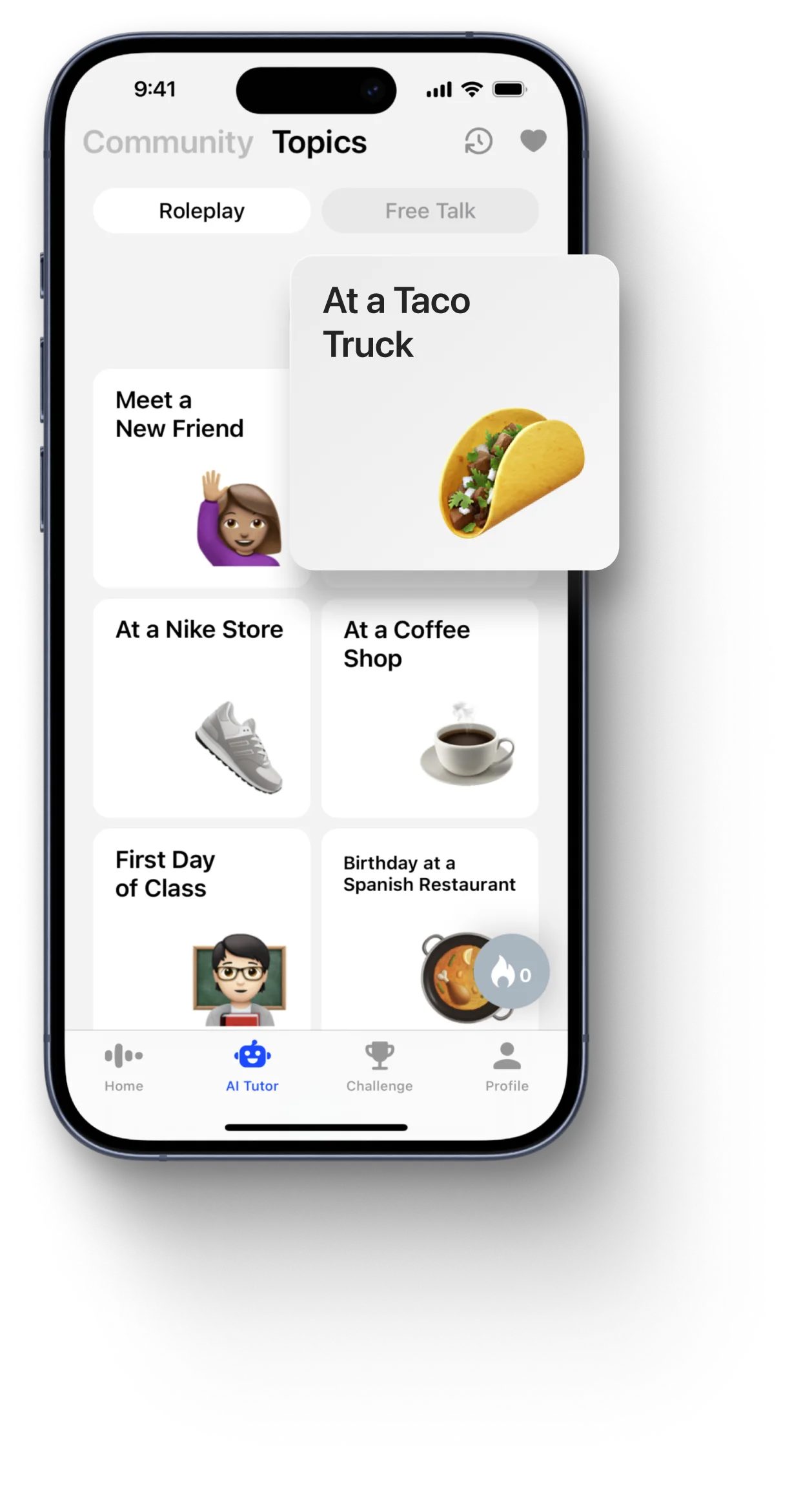
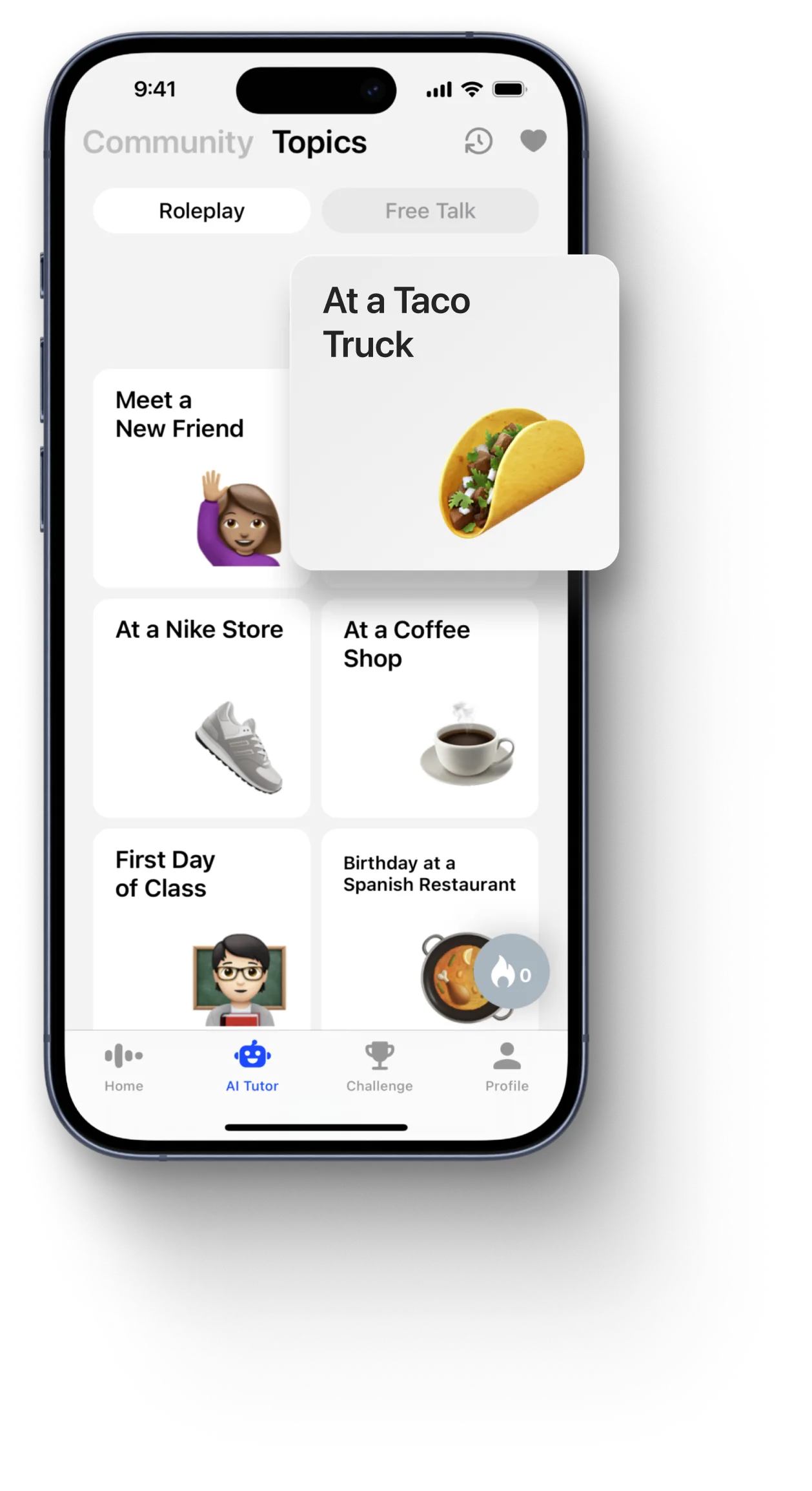
Where Duolingo has you tap, Speak has you talk, from the first lesson. A short video with a human instructor introduces a phrase, you repeat it in several variations, and then an AI tutor holds an open conversation with you and corrects your pronunciation and grammar. You can also make up your own scenario, such as a job interview or a call to a landlord, and rehearse it as often as you like. For someone who reads Spanish fine but locks up when talking, that’s the gap Duolingo leaves.
There’s no free plan after the 7-day trial, and on the App Store Premium costs $83.99 a year or $17.99 a month (as of November 2026). Premium caps how much of the advanced AI feedback you get each day; Premium Plus, at about twice the price, lifts the cap. Reading and writing get little attention, by design. Speak runs on iPhone, iPad, and Android, and teaches only Spanish, French, Italian, Japanese, and Korean, plus English.
What it does
- Speaking drills from the first lesson
- AI tutor that corrects pronunciation and grammar
- Open conversations and custom role-play scenarios
- Short video lessons with human instructors
Pros
- You speak your own sentences in every lesson
- Feedback on grammar, not just pronunciation
- Practice any time, with no tutor to book
Cons
- No free plan after the 7-day trial
- Little reading or writing practice
- Teaches only six languages
- Unlimited advanced AI feedback needs Premium Plus
- Skip if:
- Learners of German, Portuguese, or another language Speak doesn't teach.
#2 3.6/5

italki is a marketplace, not a course. You browse tutors, filter them by price, country, and specialty, such as conversation or exam prep, and book video lessons one at a time, paid for with italki credits you buy in advance. There’s no subscription. Spanish tutors cost $4 to $60 an hour, and a 30-minute lesson usually runs $4 to $10 (as of November 2026). Community tutors are the cheaper, informal choice for conversation practice; professional teachers are certified and usually charge more.
A good tutor does what no app quite manages: notices the tense you keep avoiding, steers the conversation onto it, and adjusts each lesson to you. That also makes italki the strongest fix for the Duolingo plateau, because at intermediate level you need conversation and correction more than new words. And it covers more than 130 languages.
The weak spot is that everything depends on the tutor. Some bring a plan and send a recap of your mistakes after each class; others just chat, so you may need to try several before one fits. Each tutor sets their own cancellation rules, often 24 hours’ notice, and lessons have to be booked across time zones.
What it does
- Thousands of Spanish tutors, filtered by price, country, and specialty
- One-to-one video lessons of 30 to 90 minutes
- Pay per lesson with credits, with no subscription
- Discounted trial lessons
- More than 130 languages
Pros
- Conversation with a person who corrects you
- Lessons shaped around your level and goals
- Cheap community tutors for plain conversation practice
Cons
- Quality and structure vary from tutor to tutor
- Every lesson has to be booked at a set time
- Regular lessons cost more than most app subscriptions
- Skip if:
- Learners who want a set course to follow without planning lessons.
#3 3.0/5
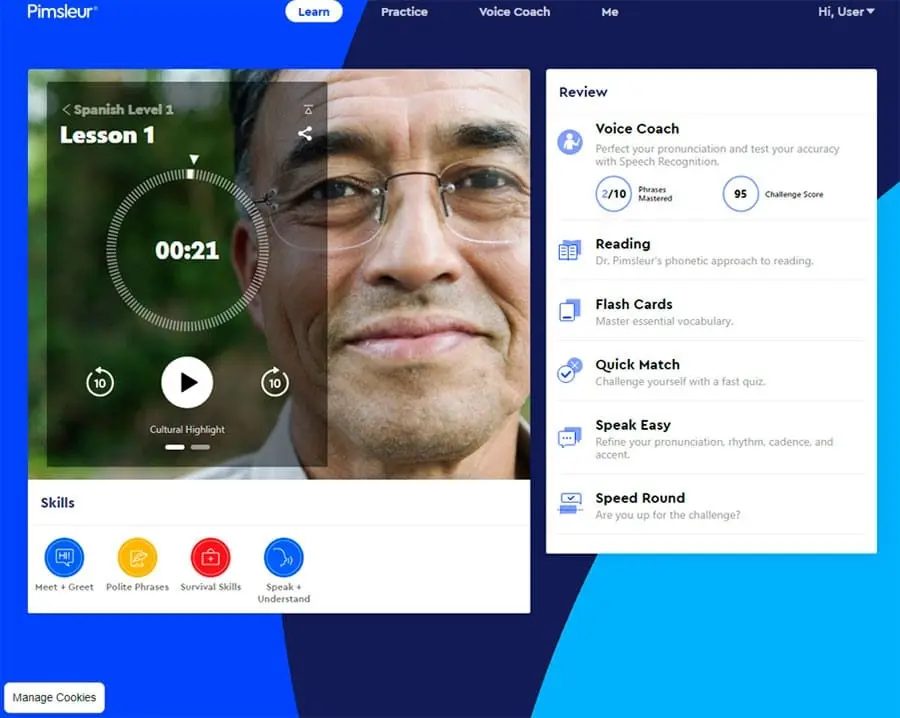
Pimsleur only works where you can talk out loud, which rules out a crowded train but suits a drive alone. Each 30-minute lesson is a recorded conversation: a narrator prompts you in English, you answer in Spanish out loud, and old words come back at growing intervals so they stick. It plays through Apple CarPlay and Android Auto, and an AI Voice Coach scores your pronunciation.
Spanish comes as two courses, Latin American and Castilian, each with five levels of 30 lessons. The limits show around intermediate, where the course ends. Much of each lesson is English narration, you hear little Spanish at natural speed, and early levels have almost no reading. It costs $19.95 a month for one language (as of November 2026), a little more than Speak’s monthly plan, and covers more than 50 languages.
What it does
- 30-minute audio lessons where you answer aloud
- Latin American and Castilian Spanish, five levels each
- AI Voice Coach for pronunciation
- Apple CarPlay and Android Auto
Pros
- Builds speaking reflexes without a screen
- Fits a drive or a walk where you can talk aloud
- A clear pronunciation model for beginners
Cons
- Ends around intermediate
- Heavy English narration
- Little reading or writing
- No use where you can't speak out loud
- Skip if:
- Learners who are already past the basics.
If you want the grammar explained
Duolingo teaches grammar by pattern: you see enough sentences and work out the rule. The explanations sit in a separate Guidebook for each unit, outside the lessons, so you can pass a lesson by guessing without knowing why it’s “estoy” and not “soy.” Language Transfer, Babbel, and Busuu explain the why, in very different formats.
1–5 per criterion · select a score for its reasoning and any sources
| # | Product | Overall | Gets you speaking , counts double | Understanding spoken Spanish | Teaches a beginner step by step | Room to grow past beginner | Keeps you practicing | Cost for a year of practice |
|---|---|---|---|---|---|---|---|---|
| 1 | Language Transfer | 3.4 | 4 | 1 | 5 | 2 | 3 | 5 |
| 2 | Babbel | 3.4 | 3 | 3 | 5 | 4 | 3 | 3 |
| 3 | Busuu | 3.4 | 3 | 3 | 4 | 4 | 3 | 4 |

Equal displayed overall scores are ordered by the earlier criteria; a known score comes before an unknown score. Identical scores use alphabetical order.
×2 = counts double in the overall score, ×½ = counts half.
How each criterion is scored
Gets you speaking
Counts double in the overall score: Most learners want to hold a conversation, and speaking is the skill course apps most often leave untrained.
How much the app has you say Spanish out loud, building your own sentences rather than only repeating, and how useful the feedback on what you said is (from a person, an AI tutor or pronunciation scoring). Judged from how the lessons work, the plan that supplies each speaking feature, and what reviewers and learners agree on about whether it gets them talking.
- 5 Most of the time is spent speaking, building your own sentences in conversation or recall drills, with feedback from a person or an AI tutor
- 4 You answer out loud most of the time and build your own sentences, but get little feedback on what you said
- 3 Regular speaking exercises or short AI or community exchanges, but most lesson time is tapping, reading or listening
- 2 Occasional repeat-after-me or tap-to-speak exercises with little useful feedback
- 1 No speaking practice, by design or in practice
Understanding spoken Spanish
How much Spanish you hear from native speakers at a natural or gradually rising speed, in varied voices and accents, so you can follow real people rather than only the app's slow example sentences. Judged from what the lessons and media contain and how much of the audio is Spanish rather than English explanation.
- 5 Hours of Spanish-only listening at every level, from slow and visual to full native speed, in many accents
- 4 Plenty of native speakers in varied, unscripted or real-world clips or conversations
- 3 Regular native-speaker dialogues or stories, mostly scripted and slower than real speech
- 2 Short, scripted sentences and dialogues, often slow or synthetic
- 1 Mostly English talk or isolated words; little Spanish from native speakers
Teaches a beginner step by step
How well the product on its own takes a beginner from nothing to building sentences: a sequence that introduces one thing at a time, and explanations of how Spanish works (verb endings, gender, word order) that let you make sentences you haven't been taught. Judged from how lessons are built and what reviewers and learners say about understanding the why.
- 5 A carefully sequenced course that explains each new pattern clearly in English as you meet it
- 4 A sequenced course with brief explanations for most new patterns
- 3 A sequenced course, but explanations are thin, absent or kept apart from the lessons
- 2 Little built-in sequence or explanation; the learner or a teacher supplies it, and results vary
- 1 Teaches no structure, by design
Room to grow past beginner
How far the material takes a learner who keeps going: how much content there is beyond the basics, and the level a committed learner can reach with it (on the CEFR scale where A2 is basic everyday Spanish and B2 is comfortable conversation on most topics). Judged from published course levels and size and from what experienced learners say about where it stops helping.
- 5 Material for every level, including advanced, that a learner can use for years
- 4 A structured course claimed to B2 or C1 with substantial content at each level
- 3 Up to roughly B1, or a longer course that reviewers say stops helping around intermediate
- 2 Beginner to roughly A2, with little to do after that
- 1 A few hours of beginner material
Keeps you practicing
How well the app gets you to practice regularly for months: how easy it is to fit a session into your day, whether the lessons or content are enjoyable rather than a chore, and streaks, goals or progress tracking that keep you coming back. Judged from how sessions work and what reviewers and long-time learners agree on.
- 5 Built around daily habit, and widely credited with keeping people practicing for months or years
- 4 Enjoyable or easy to keep up, with tracking that rewards regular practice
- 3 Easy to fit in and fine to use, with mixed views on whether it holds interest
- 2 Workable, but slow, repetitive or demanding enough that many drop it
- 1 Learners widely describe it as tedious or hard to keep up
Cost for a year of practice
What a learner pays for a year of regular practice in the form most people use: the free tier when it holds the whole course, otherwise the usual yearly or twelve monthly payments in US dollars, or for a pay-per-lesson service, about one hour of lessons a week. A generous free tier that a learner can use for months counts in the product's favor.
- 5 The whole course is free
- 4 Under about $100 a year, or a large free tier with a paid upgrade
- 3 About $100 to $160 a year
- 2 About $160 to $300 a year
- 1 Several hundred dollars a year or more for regular practice
Language Transfer
For free grammar understanding by audio
Ranking: Spanish courses that explain grammar
#1 3.4/5
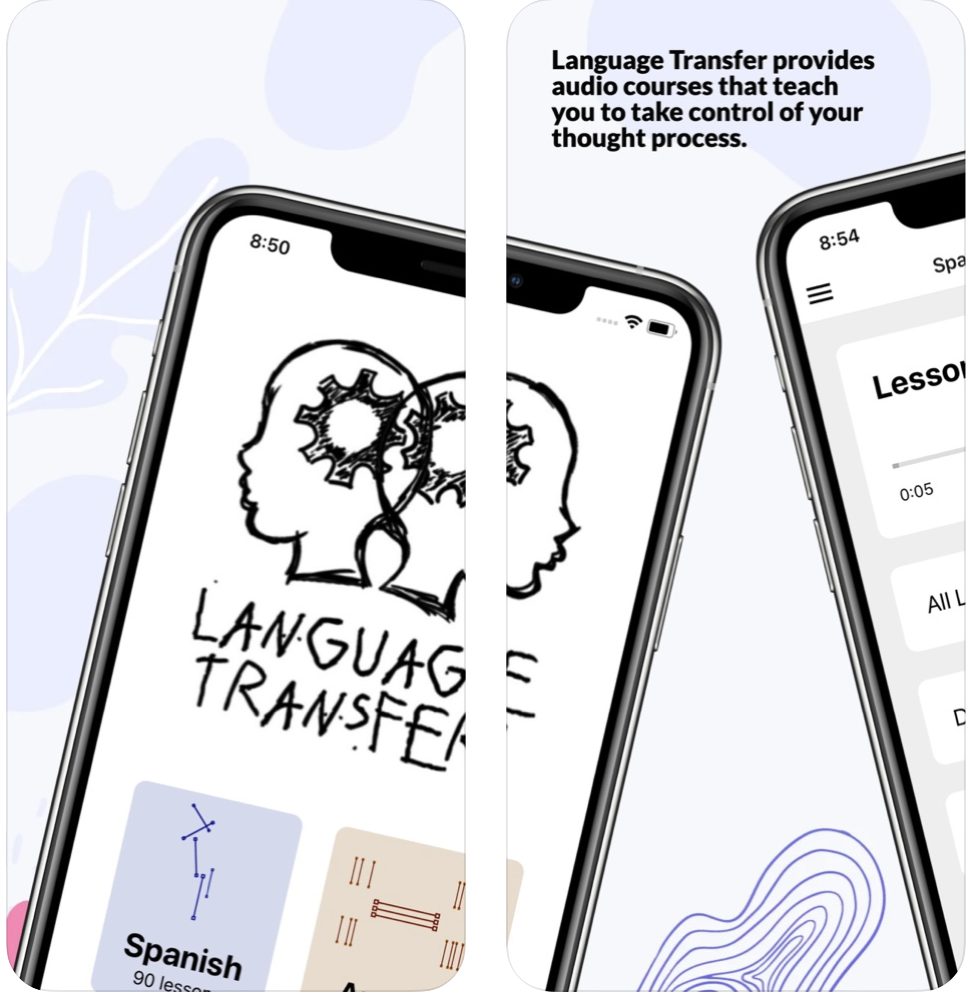
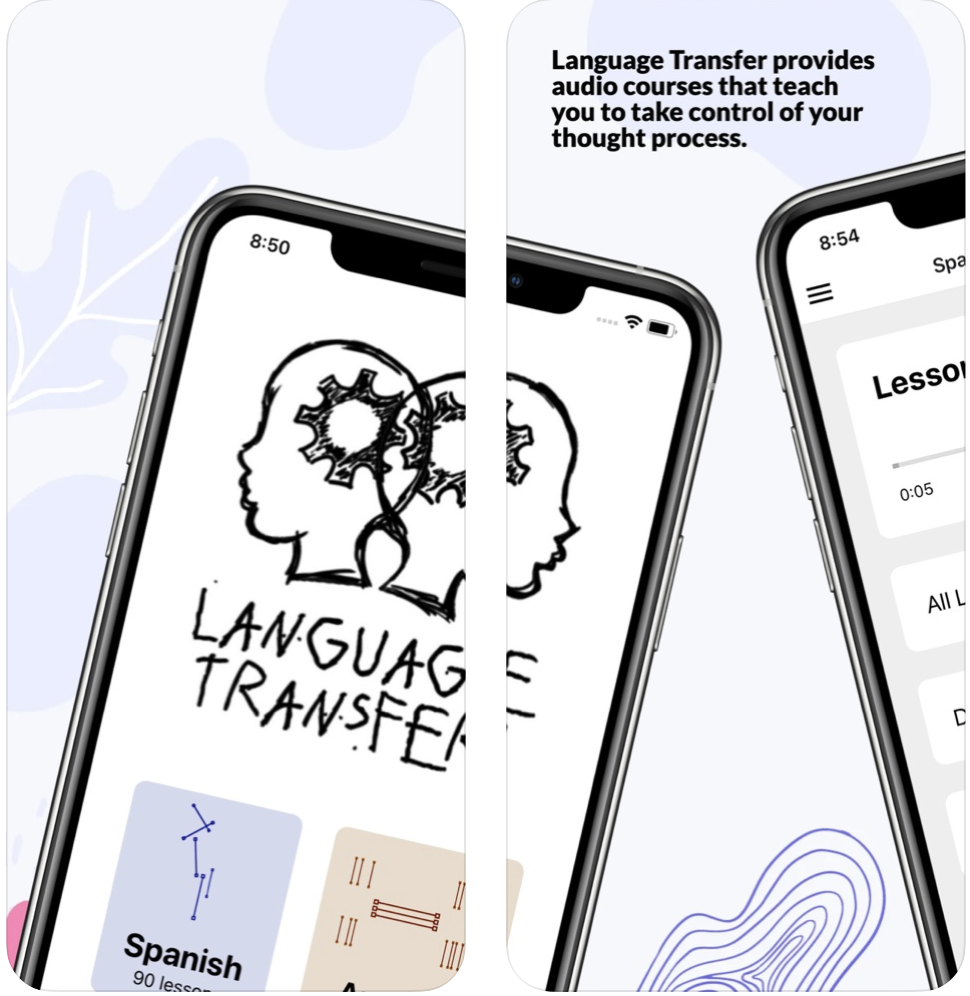
Picture a teacher and one student working out Spanish from English, step by step: how many English words carry straight over, how a verb changes for “I” and “you,” and then a pause while you build the sentence yourself before the student answers. That’s Language Transfer’s Complete Spanish, 90 short audio lessons where you think and say each answer aloud. It shows you how the language is put together, which is exactly what Duolingo’s pattern matching leaves out.
Everything is free, with no ads and no sign-up; its creator, Mihalis Eleftheriou, runs it on donations. It has no exercises, quizzes, or progress tracking, and you don’t hear native speakers, so you can’t test yourself and you won’t pick up an accent from it. It takes you from beginner to lower intermediate. Besides Spanish, it has courses in a few other languages, such as French and Arabic.
What it does
- 90 audio lessons in Complete Spanish
- You build each sentence aloud before hearing the answer
- Free app, website, YouTube, and SoundCloud
- Downloadable audio
Pros
- Free, with no ads or sign-up
- Explains why Spanish works the way it does
- Gets you saying your own sentences from the first lesson
Cons
- No exercises, quizzes, or progress tracking
- No native-speaker audio
- Stops at lower intermediate
#2 3.4/5
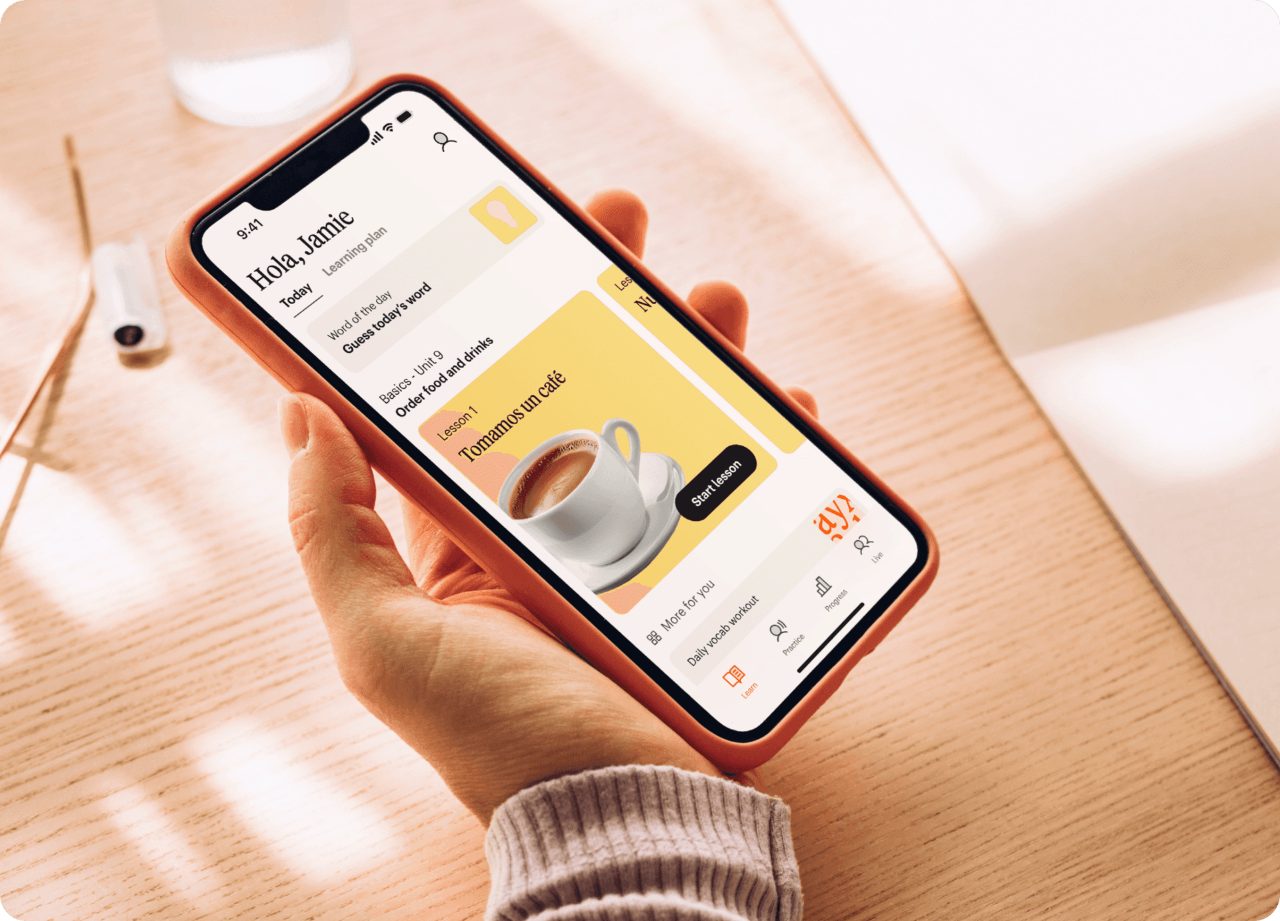
Babbel is what Duolingo would look like if it explained itself. A lesson introduces a few words, shows them in a short dialogue, and then stops to explain the rule behind them, in your own language, before you practice it. Courses are written for speakers of your language, so the explanations aim at the mistakes you’re likely to make. For Spanish, you choose Spain or Latin American (Mexican) Spanish.
A year costs $107.40 for all 14 languages, and a lifetime plan is a one-time $299.99 (as of November 2026). Free lessons at every level let you try it, but the full course needs a subscription. Speaking is the weaker side: Babbel Speak, its AI conversation partner, is still a beta, and a Tom’s Guide reviewer found it “too forgiving,” with short, simple chats. Babbel also does less than Duolingo to pull you back every day.
What it does
- Short lessons with grammar explained in context
- Spanish from Spain or Latin America
- Review of words you've learned, spaced over time
- Podcasts for listening
- Babbel Speak AI conversation partner, in beta
Pros
- Grammar rules explained as you meet them
- Explanations written in your own language
- One subscription covers 14 languages
- A lifetime plan for people who dislike subscriptions
Cons
- The full course needs a subscription
- The AI conversation partner is a forgiving beta
- Weaker daily pull than Duolingo
#3 3.4/5
Busuu follows the CEFR, the European scale that runs from A1 for beginners to C2 for near-native, so you always know where you stand: the Spanish course goes from A1 to C1 over more than 510 lessons, with a separate Latin American Spanish course. Its standout feature is the community. You write a short paragraph or record yourself, and other users who speak Spanish correct it, while you can correct learners of English. That has you producing your own sentences, which Duolingo almost never asks for.
Premium costs $72.99 a year (as of November 2026), less than Babbel, and unlocks the whole course, grammar review, and community feedback; Premium Plus costs a little more and adds AI conversations and pronunciation practice. The free plan opens only a few lessons in each chapter, so it’s a sampler, not a course. Nothing stops someone who isn’t a native speaker from correcting you, so treat a correction as a second opinion. The vocabulary review leans on rote flashcards.
What it does
- Spanish course from A1 to C1, plus Latin American Spanish
- Corrections of your writing and recordings from other users
- Grammar and vocabulary review
- Busuu certificates
- AI conversations on Premium Plus
Pros
- CEFR levels show exactly where you stand
- You write and say your own sentences and get them corrected
- Cheaper per year than Babbel
Cons
- The free plan opens only a few lessons per chapter
- Corrections can come from people who aren't native speakers
- Vocabulary review feels like rote flashcards
If spoken Spanish goes by too fast, or you’d rather stay free
Duolingo’s listening practice is Stories and DuoRadio, scripted audio written for learners. It helps, but it doesn’t prepare you for two friends talking over each other on a TV show. Duolingo offers material up to B2, upper intermediate on the CEFR scale, in nine courses, Spanish among them, but B2 is Duolingo’s own label for a course you still mostly tap through. Dreaming Spanish and Memrise put native speakers in your ears. Duolingo, scored next to them, is still the best free daily habit.
1–5 per criterion · select a score for its reasoning and any sources
| # | Product | Overall | Gets you speaking , counts double | Understanding spoken Spanish | Teaches a beginner step by step | Room to grow past beginner | Keeps you practicing | Cost for a year of practice |
|---|---|---|---|---|---|---|---|---|
| 1 | Duolingo | 3.4 | 2 | 3 | 3 | 4 | 5 | 5 |
| 2 | Memrise | 3.3 | 3 | 4 | 3 | 3 | 3 | 4 |
| 3 | Dreaming Spanish | 3.0 | 1 | 5 | 1 | 5 | 4 | 4 |



×2 = counts double in the overall score, ×½ = counts half.
How each criterion is scored
Gets you speaking
Counts double in the overall score: Most learners want to hold a conversation, and speaking is the skill course apps most often leave untrained.
How much the app has you say Spanish out loud, building your own sentences rather than only repeating, and how useful the feedback on what you said is (from a person, an AI tutor or pronunciation scoring). Judged from how the lessons work, the plan that supplies each speaking feature, and what reviewers and learners agree on about whether it gets them talking.
- 5 Most of the time is spent speaking, building your own sentences in conversation or recall drills, with feedback from a person or an AI tutor
- 4 You answer out loud most of the time and build your own sentences, but get little feedback on what you said
- 3 Regular speaking exercises or short AI or community exchanges, but most lesson time is tapping, reading or listening
- 2 Occasional repeat-after-me or tap-to-speak exercises with little useful feedback
- 1 No speaking practice, by design or in practice
Understanding spoken Spanish
How much Spanish you hear from native speakers at a natural or gradually rising speed, in varied voices and accents, so you can follow real people rather than only the app's slow example sentences. Judged from what the lessons and media contain and how much of the audio is Spanish rather than English explanation.
- 5 Hours of Spanish-only listening at every level, from slow and visual to full native speed, in many accents
- 4 Plenty of native speakers in varied, unscripted or real-world clips or conversations
- 3 Regular native-speaker dialogues or stories, mostly scripted and slower than real speech
- 2 Short, scripted sentences and dialogues, often slow or synthetic
- 1 Mostly English talk or isolated words; little Spanish from native speakers
Teaches a beginner step by step
How well the product on its own takes a beginner from nothing to building sentences: a sequence that introduces one thing at a time, and explanations of how Spanish works (verb endings, gender, word order) that let you make sentences you haven't been taught. Judged from how lessons are built and what reviewers and learners say about understanding the why.
- 5 A carefully sequenced course that explains each new pattern clearly in English as you meet it
- 4 A sequenced course with brief explanations for most new patterns
- 3 A sequenced course, but explanations are thin, absent or kept apart from the lessons
- 2 Little built-in sequence or explanation; the learner or a teacher supplies it, and results vary
- 1 Teaches no structure, by design
Room to grow past beginner
How far the material takes a learner who keeps going: how much content there is beyond the basics, and the level a committed learner can reach with it (on the CEFR scale where A2 is basic everyday Spanish and B2 is comfortable conversation on most topics). Judged from published course levels and size and from what experienced learners say about where it stops helping.
- 5 Material for every level, including advanced, that a learner can use for years
- 4 A structured course claimed to B2 or C1 with substantial content at each level
- 3 Up to roughly B1, or a longer course that reviewers say stops helping around intermediate
- 2 Beginner to roughly A2, with little to do after that
- 1 A few hours of beginner material
Keeps you practicing
How well the app gets you to practice regularly for months: how easy it is to fit a session into your day, whether the lessons or content are enjoyable rather than a chore, and streaks, goals or progress tracking that keep you coming back. Judged from how sessions work and what reviewers and long-time learners agree on.
- 5 Built around daily habit, and widely credited with keeping people practicing for months or years
- 4 Enjoyable or easy to keep up, with tracking that rewards regular practice
- 3 Easy to fit in and fine to use, with mixed views on whether it holds interest
- 2 Workable, but slow, repetitive or demanding enough that many drop it
- 1 Learners widely describe it as tedious or hard to keep up
Cost for a year of practice
What a learner pays for a year of regular practice in the form most people use: the free tier when it holds the whole course, otherwise the usual yearly or twelve monthly payments in US dollars, or for a pay-per-lesson service, about one hour of lessons a week. A generous free tier that a learner can use for months counts in the product's favor.
- 5 The whole course is free
- 4 Under about $100 a year, or a large free tier with a paid upgrade
- 3 About $100 to $160 a year
- 2 About $160 to $300 a year
- 1 Several hundred dollars a year or more for regular practice
#1 3.4/5
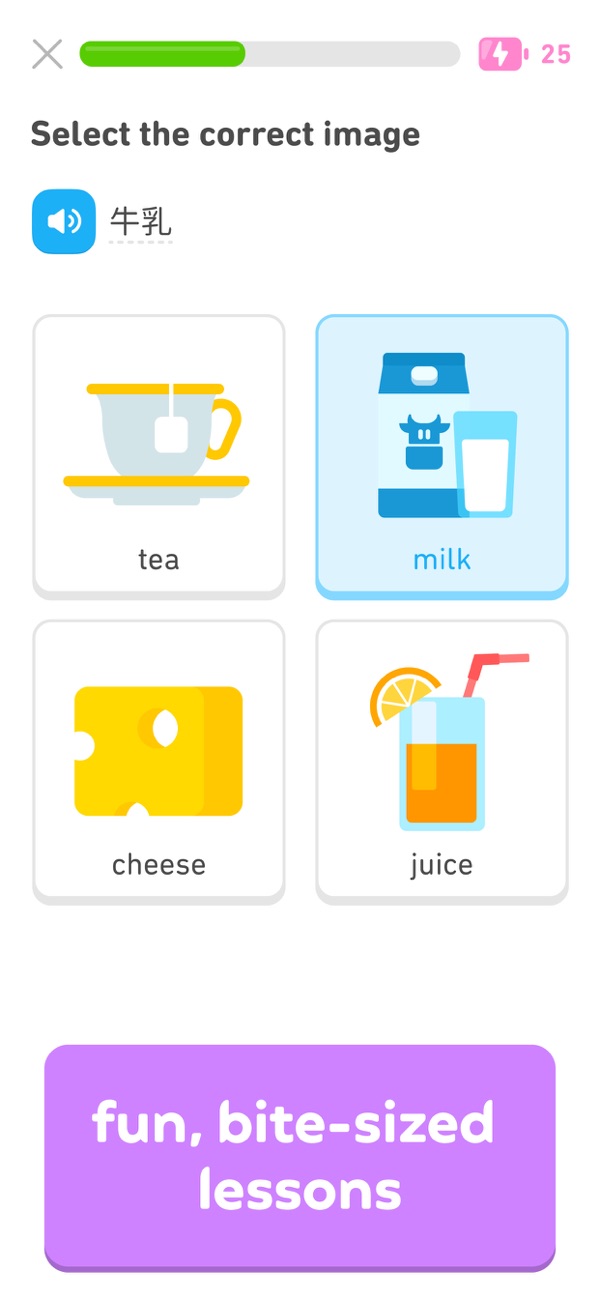
For a lot of learners, staying is the right call. No other app here is as good at getting you to practice every day: five-minute lessons, streaks, and leagues make skipping a day feel worse than doing a lesson. The full course is free in more than 40 languages, and in Spanish and eight other courses it includes upper-intermediate material at no cost. If you’re learning casually, or mainly want to keep a language from slipping away, Duolingo does the job.
On the free plan, you put up with ads and Energy, and Super removes both for about $13 a month (as of November 2026). Paying doesn’t change how Duolingo teaches, though: speaking practice stays thin, grammar stays in the Guidebooks, and listening stays scripted. For most people the best setup is to keep Duolingo as the daily habit and add one tool from the sections above for the gap that bothers you most.
What it does
- Five-minute lessons with streaks, leagues, and daily goals
- More than 40 languages
- Stories and DuoRadio for listening
- Grammar notes in a Guidebook for each unit
- Super plan without ads or Energy limits
Pros
- The best app here for building a daily habit
- The full course is free
- Upper-intermediate material free in Spanish and other large courses
Cons
- Speaking exercises are short and easy to pass
- Grammar is explained outside the lessons
- The free plan has ads and a daily Energy limit
- Listening is scripted audio for learners
#2 3.3/5
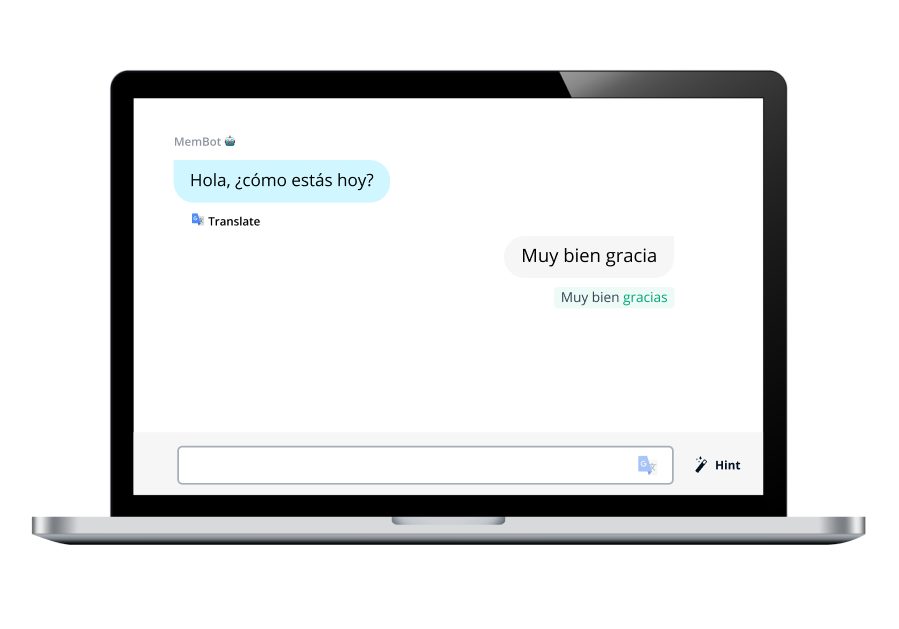
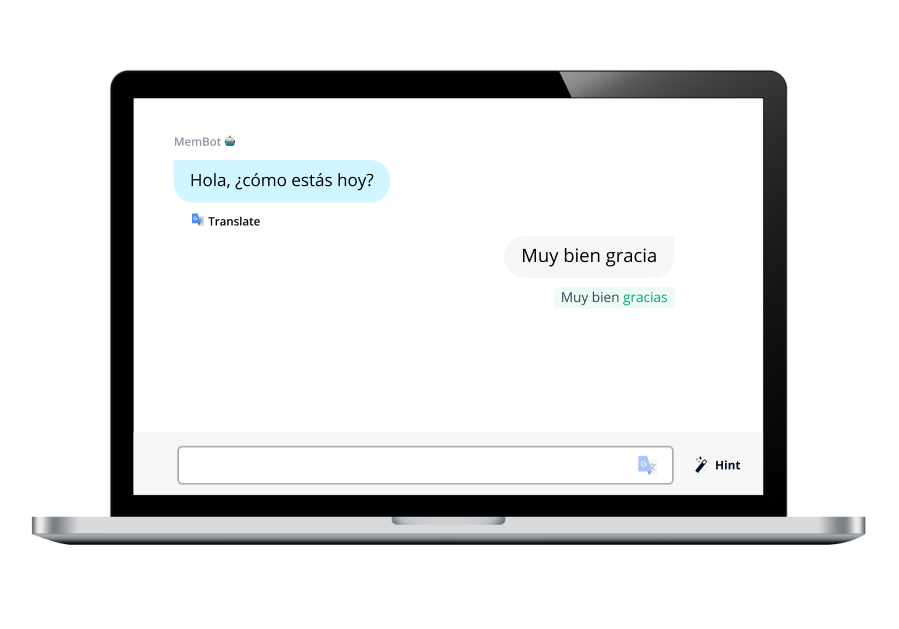
Memrise is a vocabulary app at heart, so don’t expect it to teach grammar. Its Spanish course groups words around situations you’ll face, like ordering food or asking for directions, and plays short clips of native speakers saying them, with separate courses for Spain and Mexico. An AI partner then lets you rehearse those situations in conversation. That mix suits a beginner planning a trip who wants to recognize Spanish in many different voices and accents.
The free plan limits lessons and videos, shows ads, and allows one speaking session a day; Pro lifts those limits for $61.99 a year (as of November 2026). For Spanish listening past the beginner stage, Dreaming Spanish goes much further, but Memrise covers many more languages.
What it does
- Lessons built around everyday situations
- Short clips of native speakers
- AI conversation partner
- Separate Spain and Mexico Spanish courses
Pros
- Many native voices and accents
- Practical phrases for travel
- Courses in many languages beyond Spanish
Cons
- Little grammar teaching
- The free plan allows one speaking session a day
- Builds vocabulary more than conversation
Dreaming Spanish
For understanding spoken Spanish at any level
Ranking: Duolingo and two listening apps
#3 3.0/5
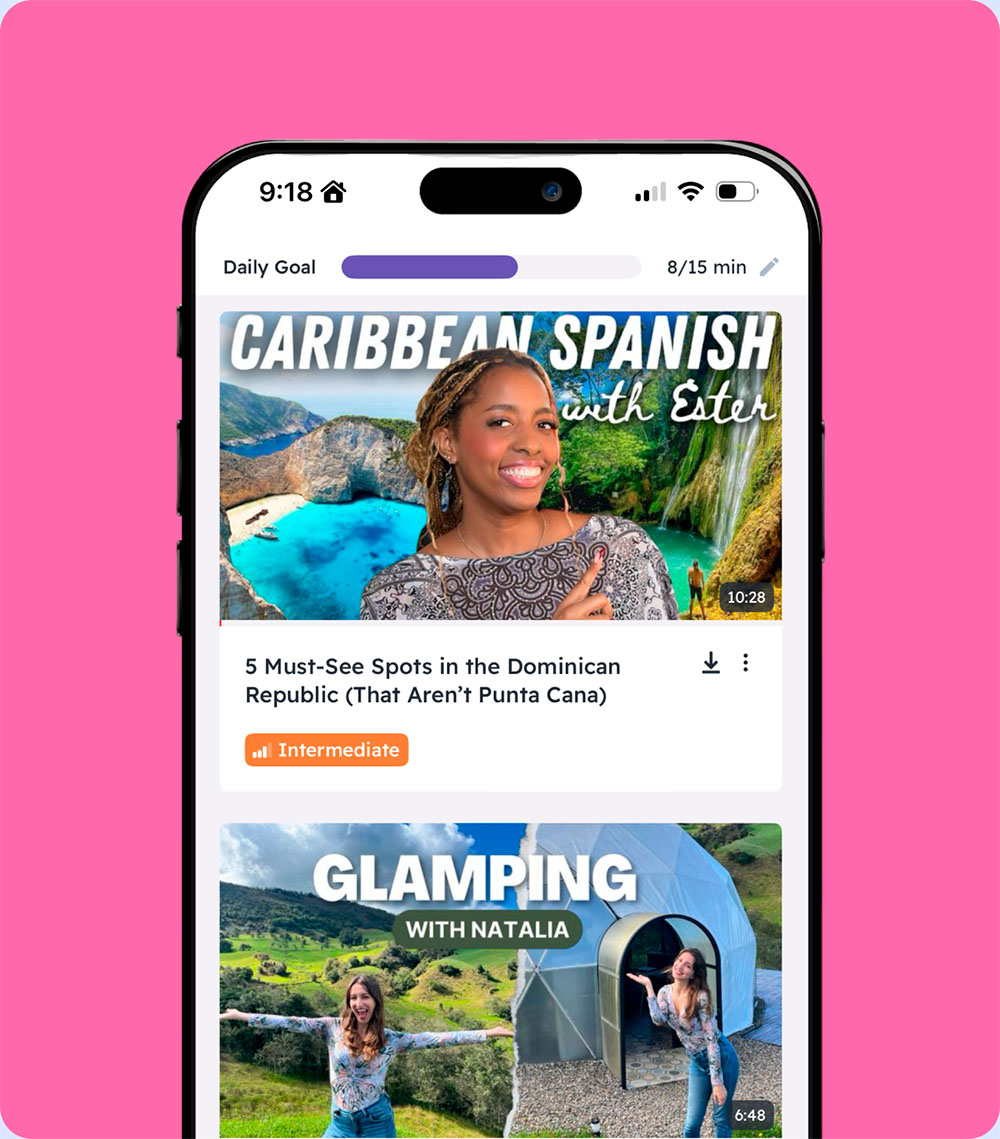
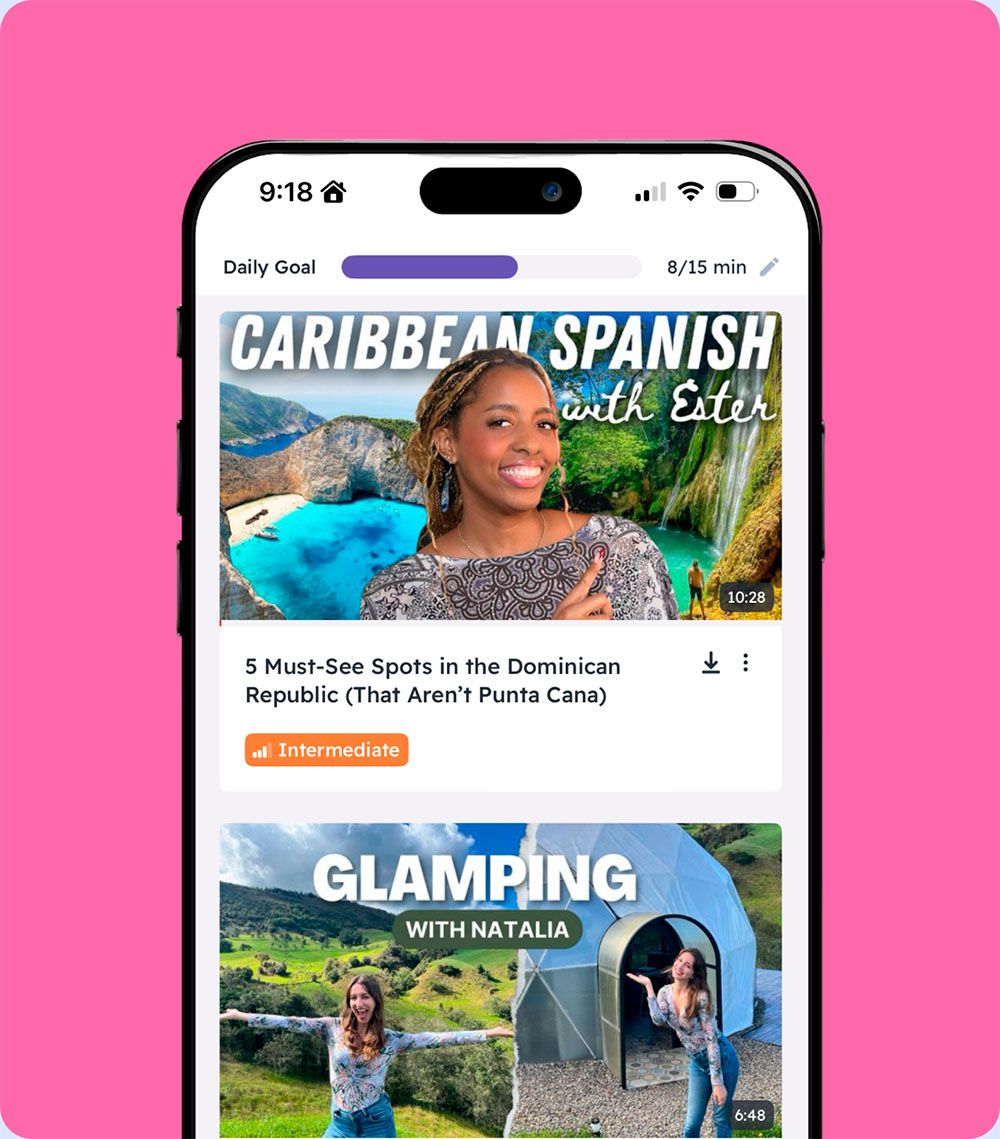
If you can read a Duolingo story but lose the thread when a native speaker talks, Dreaming Spanish is the fix. It’s a library of videos entirely in Spanish, sorted from Superbeginner, where guides explain with drawings and gestures, to Advanced at native speed, with guides from Spain and across Latin America you can filter by. The method is called comprehensible input: listen to a lot of speech you mostly understand, and understanding grows. A tracker logs your hours, including what you watch elsewhere, against a roadmap of seven levels.
Many videos are free, on the site and on YouTube. Premium unlocks more than 7,300 more for $7.99 a month on the website (as of November 2026); the App Store charges more. The tradeoff is speaking: there’s no grammar teaching and no speaking practice, and the method advises waiting about 300 hours before you start talking, roughly ten months at an hour a day. If you need to talk to your partner’s family next summer, pair it with Speak or a tutor. Apart from a separate French course, it’s Spanish only.
What it does
- Videos entirely in Spanish, from Superbeginner to Advanced
- Guides from Spain and many Latin American countries
- Hour tracker with a seven-level roadmap
- Logs hours watched outside the site
Pros
- The best tool here for following native-speed Spanish
- A large free library, including on YouTube
- A low monthly price for the full library
Cons
- No grammar teaching or speaking practice
- The method delays speaking for hundreds of hours
- Spanish and French only
- Skip if:
- Learners who need to speak Spanish within a few months.
Also considered
- Rosetta Stone teaches with pictures and audio and no translation, so, like Duolingo, it leaves you to work out the grammar yourself. Its subscription covers all 25 of its languages but costs more per year than Busuu or Babbel.



Which app to add depends on what Duolingo leaves you unable to do. If it’s talking, Speak gives you daily practice for the price of a subscription, and italki gives you a person who catches what an AI lets slide, at a cost that grows with every lesson. If it’s the grammar, Busuu’s levels and corrections suit people who like a course, Babbel suits people who want each rule explained the moment it appears, and Language Transfer costs nothing if you can study by ear. If it’s understanding people, Dreaming Spanish is the most direct route for Spanish.
None of this means deleting Duolingo. A free stack works well: Duolingo for the daily habit, Language Transfer for the grammar behind it, and Dreaming Spanish’s free videos for listening. Add Speak or a tutor once you’re ready to talk.
Frequently asked questions
Can Duolingo make you fluent?
Not on its own. Duolingo builds vocabulary, reading, and a daily habit. Fluency also takes hundreds of hours of listening to people talk at normal speed and a lot of practice saying your own sentences out loud, so pair it with a speaking tool and a listening source.
Is Babbel better than Duolingo?
For grammar, yes: Babbel explains each rule inside the lesson, in your own language, while Duolingo leaves explanations in a separate Guidebook. Duolingo is better at keeping you practicing daily, and it’s free. If you keep getting answers right without knowing why, Babbel or Busuu is worth paying for.
Does Duolingo Max help with speaking?
Somewhat. Max adds Video Call, a spoken chat with one of Duolingo’s characters, and some Super plans include it too. It’s a step up from reading set sentences aloud. If speaking is your main goal, Speak is built around conversation from the first lesson.