4 best food delivery apps, plus the best for groceries
The three big takeout apps charge the same for their memberships, so the monthly price won’t pick one for you. What decides it is which restaurants deliver to your street, what you already pay for, and what the app does when the fries don’t show up. For most people that points to DoorDash: it has the most restaurants, reaches furthest into suburbs and small towns, and got orders right more often than its rivals in a mystery-shopper test. If you pay for Amazon Prime, though, start with Uber Eats: ordering it through Amazon brings free delivery over $25. Prime no longer offers Grubhub+ to new members, although memberships already activated through Prime keep working through 2027.
Groceries are a different decision. Instacart, Walmart, and Amazon beat the takeout apps for a weekly shop, and they’re covered in their own section and scores table further down.
What a delivery order really costs
Every one of these apps is free to download, and none of them makes its money there. A restaurant order usually carries three costs on top of the food:
- A delivery fee, set per restaurant. A membership removes it on eligible orders.
- A service fee, which the app keeps. DoorDash’s varies with distance and order size. The three takeout memberships lower it but don’t remove it.
- Menu markups. Restaurants can charge more on an app than at the counter, and DoorDash says outright that it doesn’t require delivery prices to match in-store prices. You won’t see this one as a line on the receipt.
Then there’s the tip, which goes to the courier. On DoorDash, the driver gets all of it.
The three takeout memberships cost the same per month, but their benefits and order minimums differ. Prices are as of November 2026:
| Membership | Price | $0 delivery on | Note |
|---|---|---|---|
| DashPass (DoorDash) | $9.99/mo or $96/yr | Eligible orders above the store’s minimum | Free with Chase Sapphire cards |
| Uber One (Uber Eats) | $9.99/mo or $96/yr | Eligible orders above the store’s minimum | Amex Platinum credits can cover it |
| Grubhub+ | $9.99/mo | Eligible orders above the restaurant’s minimum | No longer offered to new Prime members |
| Instacart+ | $9.99/mo or $99/yr | Groceries over $10, restaurant orders over $25 | Costco needs $35; service fee still charged |
| Walmart+ | $12.95/mo or $98/yr | Groceries over $35 | Half price with SNAP food benefits, WIC, or Medicaid |
| Amazon Prime | $14.99/mo or $139/yr | Same-day groceries over $25 in most areas | No service fee on same-day groceries |
Is a membership worth it? Say the restaurants you use charge around $4 for delivery. On orders that qualify for $0 delivery, a $10 membership saves its monthly cost by the third order, and any service-fee discount adds to that. If you order once or twice a month, skip it and pay per order, unless a card or Prime gives you one for nothing.
DoorDash
Best for most people ordering takeout
#1 4.2/5
 (opens full size in a new tab)
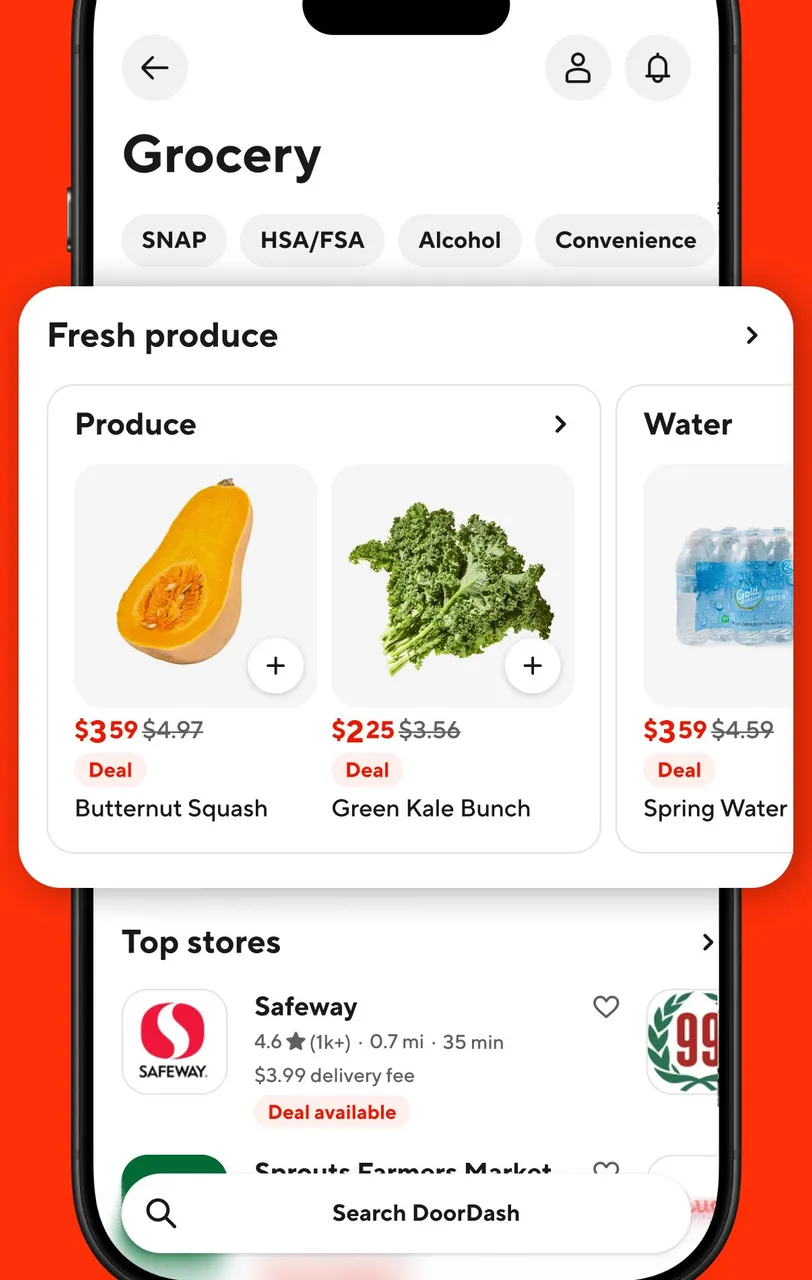
DoorDash is the biggest delivery app in the US, with more than half the market, and that size is the reason to pick it. More restaurants sign up where the customers are, so in a suburb or a small town DoorDash is the app most likely to show you more than a pizza chain and a sandwich shop. Its App Store listing claims more than 310,000 menus, though that count includes Canada, Australia, and New Zealand.
It also does the basic job well. In Intouch Insight’s mystery-shopper test, DoorDash brought the right food to the right address more often than Uber Eats and Grubhub, and its deliveries averaged about 26 minutes from restaurant to door, against roughly 36 for Grubhub and 38 for Uber Eats.
The weak spot is the bill. DoorDash says marked-up menu prices are one of its most common complaints, and the bill-splitting app Splitty estimates the markup at around 20%. When an order goes wrong, you report missing items in the app and may get a credit, a refund, or a redelivery. Support runs around the clock by chat and phone, but some customers report getting small credits instead of full refunds. DashPass is the membership to get if you have a Chase Sapphire card, since it’s included, and it also works on Caviar, DoorDash’s app for hand-picked local restaurants.
What it does
- Restaurants, groceries, convenience, and retail stores in one app
- DashPass for free delivery and a lower service fee on eligible orders
- Scheduled orders, group orders, and pickup
- Grocery orders from Kroger, Albertsons, ALDI, and other chains
Pros
- DashPass is included with Chase Sapphire cards
Cons
- Menu prices are often higher than at the restaurant
- Some customers get a small credit rather than a full refund
- Choose if:
- You live outside a big city and want the most restaurants that deliver to you
Uber Eats
The pick for Prime members and Uber riders
#2 3.7/5
 (opens full size in a new tab)
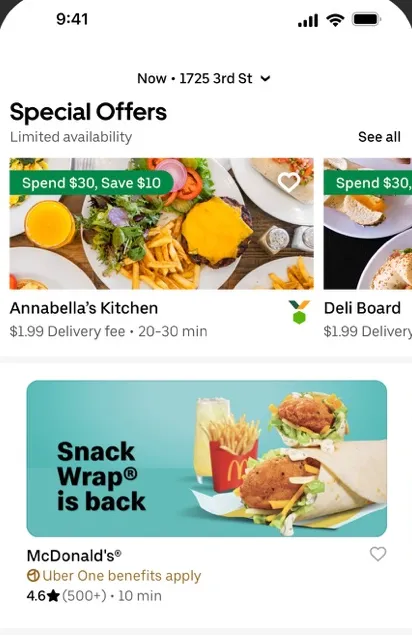
Uber Eats is DoorDash’s closest rival in most cities, and Prime makes it the cheaper choice for some people. Prime members can order Uber Eats inside the Amazon app, without an Uber account, and pay no delivery fee on orders over $25. If you already pay for Prime, that’s most of what a takeout membership gives you, at no extra cost.
Uber One, Uber’s own membership, adds things DashPass doesn’t: 5% back in credits on eligible Uber rides and membership sharing for one other adult in your household. The minimum order for $0 delivery varies by store and shows on the store’s page, and the membership lowers the service fee rather than removing it.
The trouble starts when an order goes wrong. In Sogolytics’ survey of 1,002 US delivery app users, Uber Eats came last of the apps it ranked on fixing problems; 35% of its users who reported a problem order got a full refund, the lowest share in the survey. Delivery itself is a mixed picture: the same survey found Uber Eats and DoorDash essentially tied on order quality, while Intouch Insight’s test clocked Uber Eats slowest. Its selection is wide in cities but thinner than DoorDash’s further out.
What it does
- Restaurants, groceries, pharmacy, and convenience stores in one app
- Uber One for free delivery and up to 10% off at participating stores
- Ordering through the Amazon app for Prime members
- Scheduled orders, pickup, and paid priority delivery
Pros
- Uber One also earns credits on Uber rides
- Amex Platinum credits can pay for Uber One
Cons
- Fewest full refunds for problem orders in Sogolytics' survey
- Fewer restaurants than DoorDash outside big cities

Grubhub
Lower menu prices in many states
#3 3.2/5
 (opens full size in a new tab)
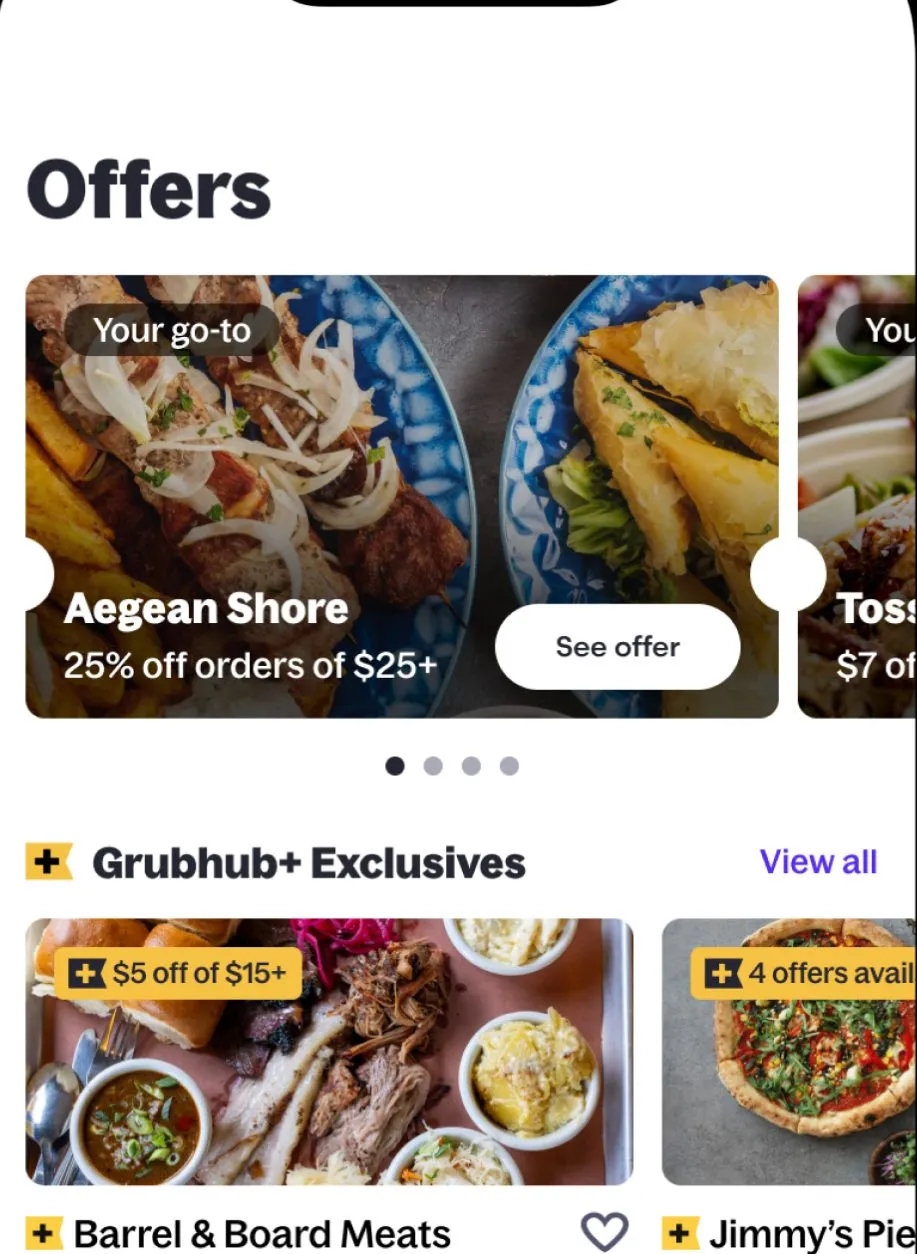
Grubhub is the smallest of the big three, but its menu prices are often the lowest. NetCredit priced the same items from seven fast-food chains on all three apps in about 185 US cities and found Grubhub cheapest in 24 states, against 13 each for DoorDash and Uber Eats. In New York City, Grubhub’s menu prices came out about 8% to 12% lower than both. Grubhub also backs eligible orders with a price guarantee: if the same order would have cost less on another app, it credits you the difference plus $5.
Grubhub also tied for first on problem resolution in Sogolytics’ survey. Deliveries are another story: in Intouch Insight’s test, Grubhub took about 36 minutes on average and had the lowest customer satisfaction of the three.
Grubhub’s selection is strongest in big cities, especially on the East Coast, and it thins out fast elsewhere. One reviewer testing in Kona, Hawaii, found no delivery at all. In New York City, Grubhub runs as Seamless, the same service under its older local name, and one Grubhub+ membership works on both. If you activated Grubhub+ through Prime before the deal ended, it keeps working through the end of 2027.
What it does
- Restaurant delivery and pickup, with groceries through an Instacart-run tab
- Grubhub+ for free delivery and lower service fees on eligible orders
- A price guarantee that credits the difference plus $5
- Scheduled orders, group orders, and discounts on faster delivery
Pros
- Lowest fast-food menu prices of the big three in 24 states
- Grubhub+ gives 5% back on pickup orders
Cons
- Few restaurants outside big cities
- Slower deliveries than DoorDash in Intouch Insight's test
- Choose if:
- You live in a big East Coast city and want lower fast-food menu prices without a membership
Instacart
Widest choice of grocery stores
#4 3.2/5
 (opens full size in a new tab)
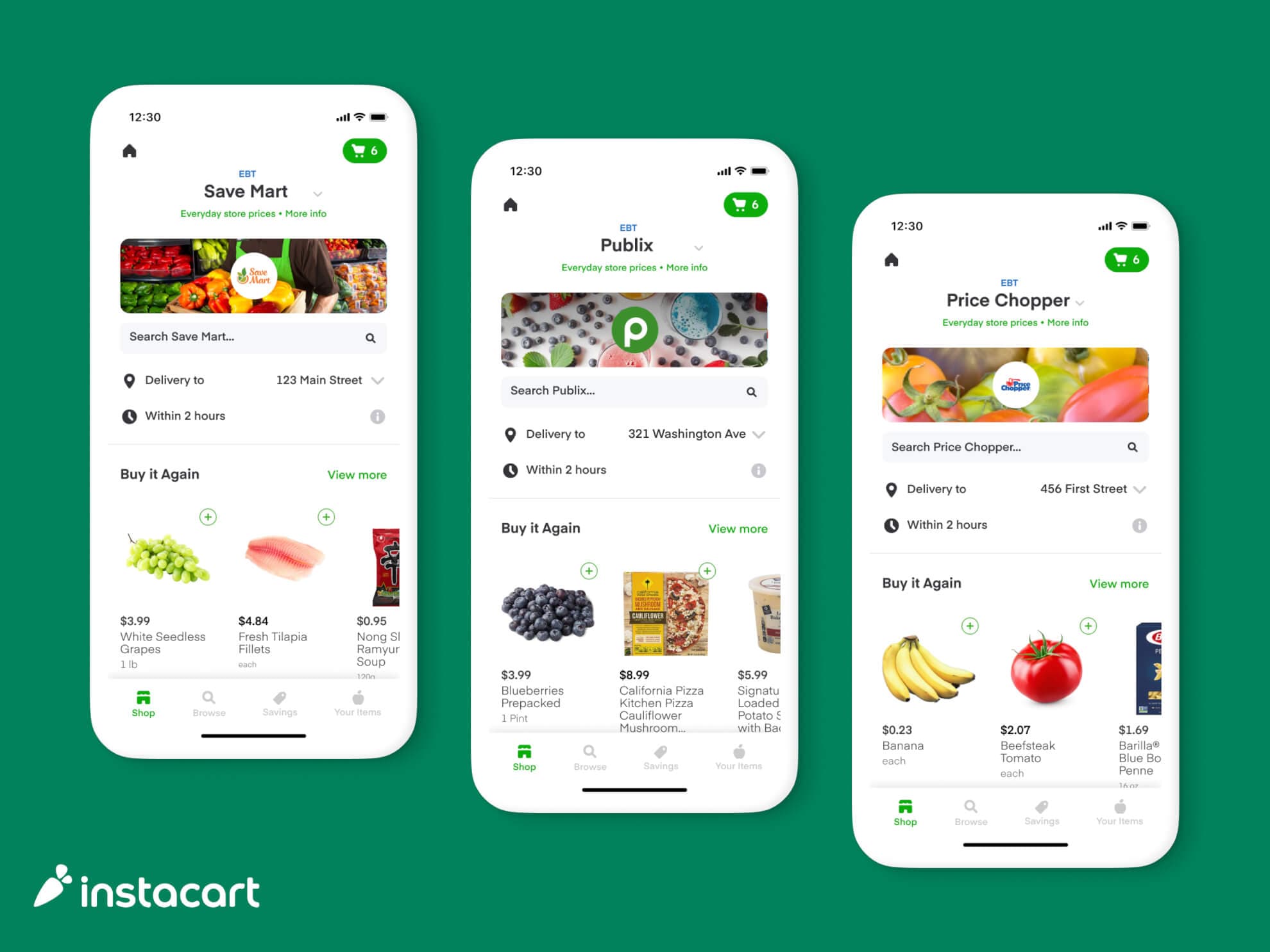
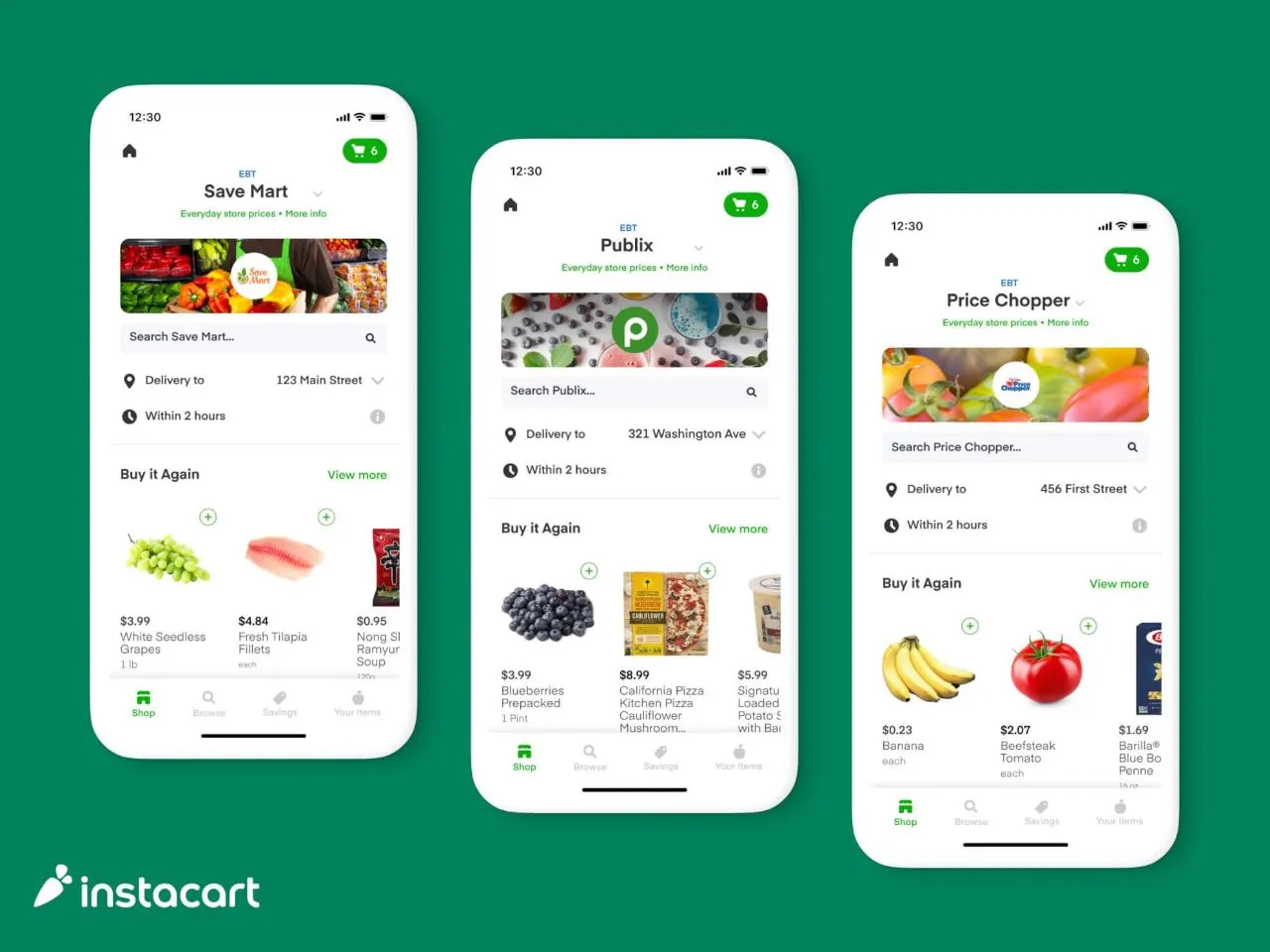
Instacart is a grocery app first. A shopper picks your order at a store near you, from nearly 100,000 stores run by more than 2,200 retailers across the US and Canada, including club stores such as Costco. That range makes it the best option here for keeping your usual store or choosing between local chains.
It’s in the takeout ranking because Uber Eats powers its Restaurants tab. You order in the Instacart app, not the website, and Uber Eats handles payment, fulfillment, and support chat. EBT cards and Instacart credits don’t work for restaurant orders. The reason to use it at all is Instacart+: it removes the delivery fee on eligible restaurant orders over $25, so a household that already pays for it for groceries may not need a second membership for takeout.
For groceries, each retailer sets its own Instacart prices. Many charge what they do in the store and some charge more, and the app shows each store’s policy. Every order also carries a service fee, with or without Instacart+. Without the membership, delivery starts at $3.99 for same-day orders over $35.
What it does
- Grocery and retail delivery from nearly 100,000 stores
- Restaurant delivery powered by Uber Eats, in the app only
- Instacart+ for free delivery on groceries and eligible restaurant orders
- One-hour priority delivery where available
Pros
- More stores and chains than any other app here
- Instacart+ covers both groceries and takeout
- Each store's pricing policy shows in the app
Cons
- A service fee on every order, even with Instacart+
- Restaurant orders get Uber Eats support and don't accept EBT or Instacart credits
- Some stores charge more than their shelf prices
- Skip if:
- You only want takeout and don't buy groceries online
For groceries: three more apps to know
For a weekly shop, DoorDash and Uber Eats are convenient but rarely the best deal. DashPass and Uber One cover the delivery fee on eligible grocery orders, but store prices can differ from shelf prices and a service fee remains. These apps make the most sense when you already pay for the membership and need a few things fast. For a full cart, Instacart, Walmart, and Amazon usually do better, and Gopuff fills a different gap.

#2 3.8/5
Walmart supplies your order from its own stores, and its low shelf prices make it the cheapest grocery bill on this list for many households before delivery is even counted. With Walmart+, delivery is free on orders over $35. If you receive SNAP food benefits, WIC nutrition assistance, Medicaid, or similar benefits, Walmart+ Assist gives the same membership at half price.
Express delivery costs members $10, compared with $17.95 to $19.95 for non-members. Walmart+ also includes a choice of Peacock or Paramount+ and a fuel discount. Because Walmart has stores near most of the country, its delivery reaches many rural areas. The tradeoff is that you shop at Walmart and nowhere else, and there’s no restaurant-delivery marketplace.
What it does
- Grocery and household delivery from your local Walmart
- Walmart+ for free delivery above an order minimum
- Express delivery in as little as an hour, where available
- Walmart+ Assist at half price for people on SNAP, WIC, or Medicaid
Pros
- The cheapest yearly grocery membership here
- Reaches many rural areas
Cons
- Only Walmart's products and stores
- The monthly Walmart+ plan costs far more over a year than the yearly one
#5 3.4/5
If you have Prime, Amazon will deliver fresh groceries the same day in more than 2,300 US cities and towns, in the same cart as your paper towels and phone chargers. In most areas, Prime members pay nothing for delivery on orders over $25 and $2.99 below that, with no service fee. Without Prime, delivery costs $12.99 on every order, which makes it a Prime-only deal in practice.
What you give up is control over timing. Same-day orders arrive within hours, and you can’t book a one- or two-hour window. For a set window, the Amazon Fresh storefront offers two-hour slots. Prime members pay a delivery fee there below $100 unless they add Amazon’s $9.99-a-month grocery subscription for eligible deliveries. In Reviewed’s single 18-item basket test in Manhattan, Amazon Fresh cost less than Whole Foods and Wegmans through Instacart.
What it does
- Same-day grocery delivery in the regular Amazon app
- Amazon Fresh and Whole Foods delivery with two-hour windows
- A grocery subscription for unlimited Fresh and Whole Foods delivery
- SNAP EBT accepted, with no Prime needed
Pros
- Free same-day grocery delivery for Prime members on modest orders in most areas
- No service fee
- Groceries arrive with your other Amazon orders
Cons
- No delivery windows on same-day orders
- Expensive without Prime
- Amazon's own range, plus Whole Foods, rather than your local supermarket
- Choose if:
- You have Prime and want fresh groceries in the same cart as your other Amazon orders

#6 3.0/5
 (opens full size in a new tab)
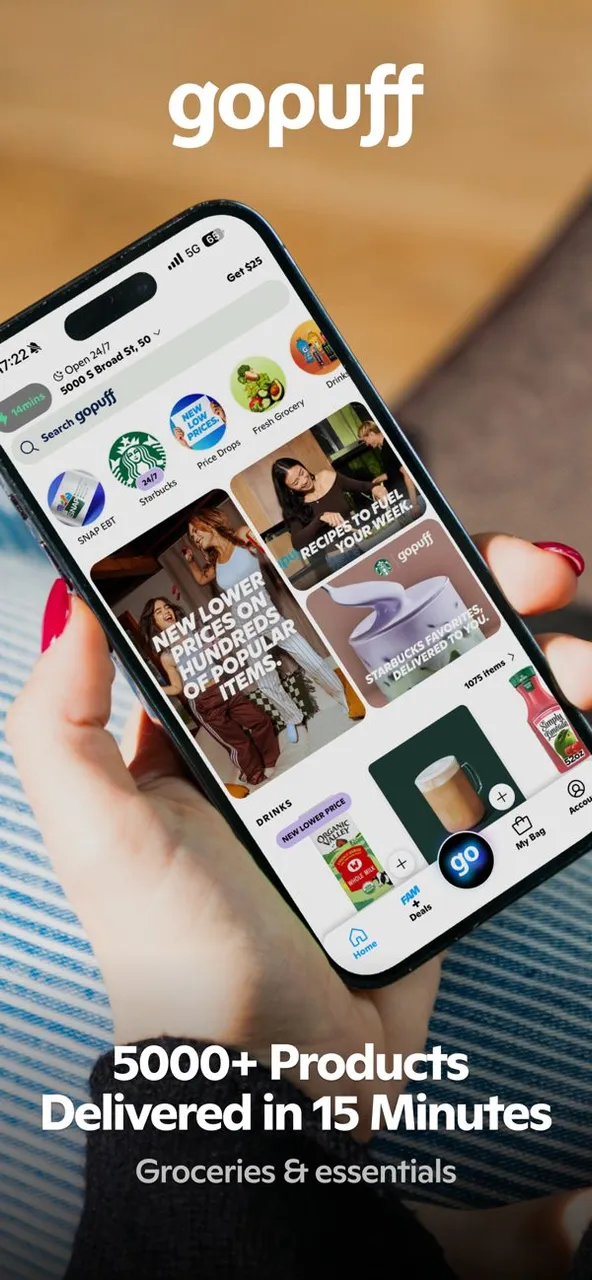
Gopuff is a convenience store that delivers. It sells its own stock of snacks, drinks, household basics, medicine, and some fresh groceries from more than 500 small warehouses, and in many places it runs around the clock. Deliveries can take as little as 15 minutes, which beats every other app here.
Gopuff charges no service fee, and its FAM membership removes the delivery fee. But a few thousand items at a convenience store’s prices won’t cover the weekly shop. This is the app for a 1 a.m. craving or a forgotten bottle of cold medicine. Alcohol delivery is available only in some markets, and Gopuff isn’t in every city.
What it does
- Delivery from Gopuff's own warehouses in as little as 15 minutes
- Open around the clock in many locations
- Alcohol in select markets
- SNAP EBT accepted
Pros
- The fastest delivery here
- Works late at night when restaurants and stores are closed
- No service fee
Cons
- A small range at convenience-store prices
- Not available in every market
- Choose if:
- You mostly need snacks and essentials quickly, often late at night
Also considered
- Postmates. Uber runs it under the same Uber account as Uber Eats, but its current perks and integrations are built around Uber Eats. For most people, Uber Eats is the app to keep.
- Caviar. DoorDash’s app for a hand-picked set of popular local restaurants, and DashPass works there too. It’s worth a look in the cities it serves, but DoorDash itself covers far more places.
How the apps score
The first table ranks the apps for restaurant takeout. The second ranks them for a weekly grocery order.
1–5 per criterion · select a score for its reasoning and any sources
| # | Product | Overall | Restaurants near you , counts double | Cost of an order without a membership | Membership value | Arrives on time and correct | Fixing a bad order | Ordering options for meals | Groceries and other stores , counts half |
|---|---|---|---|---|---|---|---|---|---|
| 1 | DoorDash | 4.2 | 5 | 3 | 4 | 4 | 3 | 5 | 5 |
| 2 | Uber Eats | 3.7 | 4 | 3 | 5 | 3 | 2 | 5 | 4 |
| 3 | Grubhub | 3.2 | 3 | 4 | 3 | 2 | 4 | 4 | 2 |
| 4 | Instacart | 3.2* | 3 | 3 | 4 | 3 | 2 | unknown | 5 |
Equal displayed overall scores are ordered by the earlier criteria; a known score comes before an unknown score. Identical scores use alphabetical order.
×2 = counts double in the overall score, ×½ = counts half.
? = unknown. * = the overall score averages only the known criteria.
How each criterion is scored
Restaurants near you
Counts double in the overall score: Readers pick a delivery app first by whether the restaurants they want deliver through it where they live; cost and perks only matter among apps that have those restaurants.
How many restaurants, local places as well as national chains, you can order delivery from in the app, and how far that selection reaches beyond big cities into suburbs and small towns. Judged from published restaurant and city counts, market share, independent coverage tests and what users in smaller places report.
- 5 The widest selection, reaching most suburbs and many small towns
- 4 A wide selection in cities and most suburbs, with gaps in small towns
- 3 A good selection in big cities, but thin in suburbs and small towns
- 2 A small selection in most places, or restaurants only in some big cities
- 1 Restaurant delivery in only a few areas, or only a sliver of restaurants
Cost of an order without a membership
What a typical $30 restaurant order costs delivered, before tip, when you don't pay for a membership: the delivery fee, the service fee, small-order fees and menu prices set higher than in the restaurant. Judged from the fee structure, third-party price comparisons across the apps and any price guarantee.
- 5 Close to the in-restaurant price, with small fees
- 4 Cheaper than the other big apps in many places, or backed by a price guarantee
- 3 In line with the big apps, with a delivery fee, a service fee and often higher menu prices than in the restaurant
- 2 Somewhat more expensive than the other big apps on most orders
- 1 Fees and markups well above the other big apps on most orders
Membership value
What the app's membership gives for its price: $0 delivery and lower fees on which orders and above what minimum, other perks, a yearly price, and whether something many people already pay for, such as Amazon Prime or a popular credit card, includes it or an equivalent perk.
- 5 Everything in 4, plus $0 delivery included with a membership many households already pay for, such as Amazon Prime
- 4 About $10 a month with useful extra perks or a cheaper yearly plan, or free with some popular credit cards
- 3 About $10 a month for $0 delivery and lower fees on eligible orders, and little else
- 2 A membership with narrow coverage, such as high minimums or few eligible restaurants
- 1 No membership
Arrives on time and correct
Judged: how often an order arrives quickly, at the right address, with the right items and still hot. Judged from third-party mystery-shopper tests and customer surveys, such as Intouch Insight and Sogolytics, and from the problems users commonly report.
- 5 Clearly the fastest and most accurate in independent tests
- 4 Among the fastest and most accurate in independent tests, with some common complaints
- 3 About average among the big apps
- 2 Noticeably more late or wrong orders than the leading apps
- 1 Late, wrong or missing orders are common
Fixing a bad order
Judged: how readily you get a refund, a credit or a redelivery when items are missing or wrong or the order is very late, and how easy support is to reach. Judged from customer surveys on problem resolution, published refund policies and support hours, and what users commonly report.
- 5 Quick full refunds or redelivery are the norm
- 4 Better than most at resolving problems in surveys, with support around the clock
- 3 Usually some credit or refund, with mixed reports
- 2 Partial credits or no resolution are common, and complaints about support are widespread
- 1 Refunds are rare and support is hard to reach
Ordering options for meals
How many of these five ordering options the app offers for restaurant orders: scheduled orders for later, group orders with a shared cart, pickup orders, alcohol delivery where the law allows, and paid priority delivery.
- 5 All five
- 4 Four of the five
- 3 Three of the five
- 2 Two of the five
- 1 One or none of the five
Groceries and other stores
Counts half in the overall score: It saves some readers a second app, but it isn't the job of a restaurant delivery app, so it counts half as much as the criteria about getting a meal delivered.
Whether the same app also delivers groceries, convenience items, pharmacy and retail goods, and from how many stores, so one app and one membership cover more than restaurant meals.
- 5 Groceries, convenience and retail from most major chains, with grocery as a core part of the app
- 4 Groceries, convenience and retail from many chains in most areas
- 3 Groceries and convenience items from some chains in many areas
- 2 A small grocery or convenience section, or one run by a partner with its own terms
- 1 Restaurant meals only
1–5 per criterion · select a score for its reasoning and any sources
| # | Product | Overall | Stores you can shop | Item prices | Cost of delivery | Delivery speed | Available where you live |
|---|---|---|---|---|---|---|---|
| 1 | Instacart | 3.8 | 5 | 3 | 3 | 3 | 5 |
| 2 | Walmart | 3.8 | 2 | 5 | 4 | 3 | 5 |
| 3 | DoorDash | 3.6 | 4 | 3 | 3 | 4 | 4 |
| 4 | Uber Eats | 3.6 | 4 | 3 | 3 | 4 | 4 |
| 5 | Amazon Fresh | 3.4 | 2 | 4 | 5 | 2 | 4 |
| 6 | Gopuff | 3.0 | 1 | 2 | 4 | 5 | 3 |
Equal displayed overall scores are ordered by the earlier criteria; a known score comes before an unknown score. Identical scores use alphabetical order.
How each criterion is scored
Stores you can shop
Which stores you can order groceries from in the app: one retailer's own stock, or a choice of supermarket chains, club stores and local grocers, judged from published store and retailer counts and the chains named.
- 5 Nearly every major chain near you, including club and specialty stores
- 4 Many major chains and local stores in most areas
- 3 A few retailers, or one retailer plus some local grocers
- 2 One retailer's full grocery range
- 1 One retailer's small range of convenience and grocery items
Item prices
What the groceries themselves cost when delivered: whether item prices match the store's shelf prices, and how low the store's prices are to begin with. Judged from the app's or retailer's pricing policy and third-party basket comparisons.
- 5 Shelf prices at a discount retailer
- 4 Shelf prices at a mid-priced grocer, or low prices with some markups
- 3 Mixed, with some stores matching their shelf prices and others marking up
- 2 Many items marked up over in-store prices
- 1 Convenience-store prices, well above supermarkets
Cost of delivery
What it costs to get a typical $75 weekly grocery order delivered, apart from the groceries: delivery and service fees, and the price and order minimum of the membership that waives them. A membership most of the app's users already pay for anyway, such as Amazon Prime for Amazon shoppers, counts at no extra cost.
- 5 $0 delivery with no service fee on a typical order, included in a membership most of its users already have
- 4 About $8 a month or less for $0 delivery with no service fee
- 3 About $8 to $10 a month for $0 delivery, with a service fee still on every order
- 2 High fees unless you pay for a membership, and a service fee still on every order
- 1 High fees on every order, even with a membership
Delivery speed
How soon an order typically arrives after you place it when you want it now, using the app's standard on-demand delivery, not a scheduled window or a paid rush option.
- 5 Within about 15 to 30 minutes
- 4 Within about an hour
- 3 Within about two hours
- 2 Same day, within several hours
- 1 Next day or later
Available where you live
How much of the US the app delivers groceries to, judged from published city, store and household counts.
- 5 Nearly every US household, including many rural areas
- 4 Most of the US, including many suburbs
- 3 Most large and mid-size metro areas
- 2 Big metro areas only
- 1 A handful of cities
How to choose
- You already pay for Instacart+: try its Restaurants tab before buying a takeout membership.
- You order rarely and won’t pay for a membership: compare the same order on Grubhub, DoorDash, and Uber Eats. Grubhub had lower menu prices in more states in NetCredit’s comparison.
- You care most about fixing a problem order: Grubhub tied for the highest satisfaction with problem resolution.
- You want groceries from your usual store: Instacart gives you the best chance of keeping it.
- You want the lowest grocery bill: Walmart with Walmart+.
- You want snacks or essentials in minutes, late at night: Gopuff.
Frequently asked questions
Can I pay with SNAP EBT on a delivery app?
Yes, for groceries at participating stores. EBT is the card you use to pay with SNAP food benefits. DoorDash accepts it at more than 57,000 grocery and convenience stores, and Amazon accepts it without a Prime membership. Walmart, Instacart, and Gopuff take it too. SNAP pays only for eligible food, so delivery fees, service fees, and tips go on a second card, and it doesn’t work for restaurant orders. If you receive benefits, Walmart+ Assist cuts the Walmart+ price in half.
Is it cheaper to order straight from the restaurant?
Usually, if you pick the food up. Ordering directly from the restaurant avoids the app’s delivery and service fees, and its own menu has no app markup. Ordering pickup through an app can still carry a service or pickup fee, so check the checkout total. Some apps reward pickup as well: Grubhub+ gives 5% back in credits on pickup orders. For delivery, a restaurant’s own website can still beat the apps on menu prices, but many restaurants send those orders out through the same courier networks, so the fees don’t always disappear.
The bottom line
DoorDash is the safest pick because it’s the app most likely to deliver from the places you want, including outside big cities, and it got more orders right than its rivals in testing. You’ll pay for that in menu prices, and some customers get small credits when support misses the mark.
Uber Eats is the better deal if you have Prime and order over $25 through Amazon, or ride with Uber enough to use its credits. Its delivery quality is close to DoorDash’s. Just know that when an order goes wrong, you’re more likely to end up without a full refund. Grubhub is the opposite trade: fewer restaurants and slower deliveries, but lower fast-food menu prices in many states and a tie for the best problem-resolution score. That makes it a good second app in a big city even if it isn’t your first.
For groceries, the choice comes down to where you like to shop. Instacart gives you the best chance of keeping your store, Walmart usually gives you the lowest grocery bill if shopping there suits you, and Amazon is the easy answer for anyone who already pays for Prime. Whatever you pick, check what your cards and memberships already include before you pay for a new one.
We scored 7 products on 12 criteria using 77 quotes, 29 of them from the products' own websites. How our rankings work